A Printable Reader's Guide to John
Printable discussion guide for Niall Williams's John — built for The Wild Gentleman Book Club. Bring it to our in-person meeting.
The Wild Gentleman Book Club
This printable reader's guide is designed for use at The Wild Gentleman Book Club meetings. Print it, bring it, and use it to spark conversation. For a full exploration of themes and context, see our complete Reader's Guide to John.
Key Themes for Discussion
- Age and Getting Older
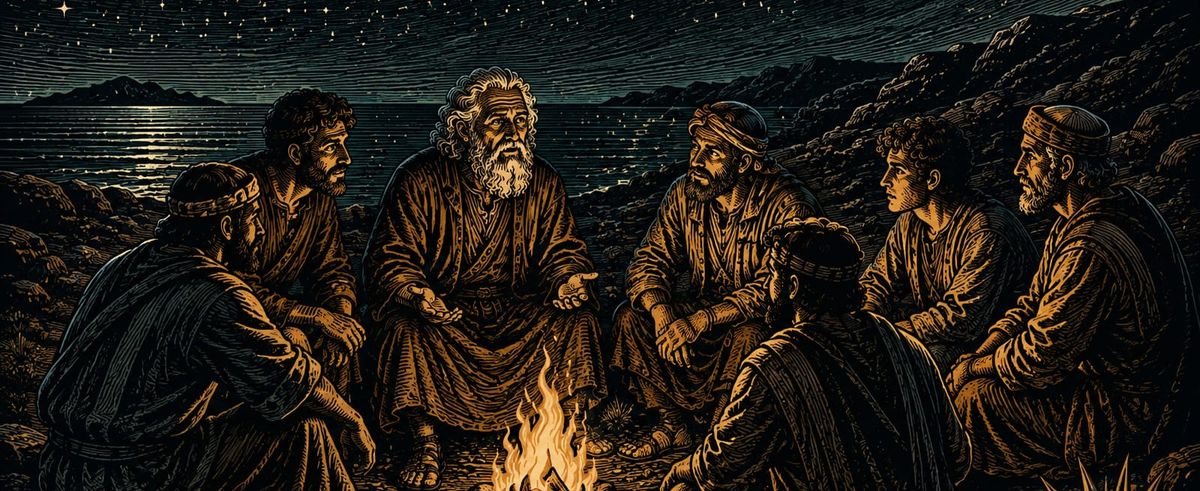
John was the youngest apostle. When we come to him in the book, he is a frail, blind man guided by younger men, dependent on others to navigate a world he can no longer see.
We live in a culture that has no framework for aging well. John offers a different model — freed by the fact that death is near, he finds the truth that his younger self could not.
- Brotherhood
The disciples in this book are depicted with great humanity. They bicker. They doubt. They make mistakes. They tend to John with a quiet reverence, unlike almost any portrayal of men caring for men I've read.
Most of us were never taught this. We were taught to compete, to hide emotions, and to solve problems through actions. Different from what John shows us: Face-to-face. Hands-on. Staying with the person who is diminished. Selfless. Supportive. Brotherhood.
- Think about the men in your life who have stayed — who showed up not when things were good but when they weren't. What do you think of how they persisted?
- Have you ever been the person who stayed when it would have been easier to leave? Have you ever been the one who left? What do those two experiences feel like from the inside?
3. Love
John's gospel is different from Matthew, Mark, and Luke.
It's all about love.
John's true revelation is that love is the thing that cannot be exiled, argued away, or killed. It outlasts everything.
But this is not sentimental love. Not the love of greeting cards or easy warmth. The love John describes is demanding, specific, and requires sacrifice.
Most of us men provide for the people we love, protect them, and show up for the big moments. But the deeper love John reveals here is deeper, something are less practiced at.
John spent sixty years learning to love the way he had been loved. That's the whole book.
Questions for Discussion
- Like John's own youth with Jesus, are there any defining events or moments from your own life that still appear or orient your thinking?
- What has age taken from you? What have you gained from age?
- What do you know now about your own life that you couldn't have known at 25?
- Think about the men in your life who showed up not when things were good but when they weren't. What do you think of how and why they persisted?
- Have you ever been the person who stayed when it would have been easier to leave? Have you ever been the one who left? What were each of those experiences like?
- John's gospel leads with love as the defining characteristic of God and Jesus's key message. Can you distinguish between the types of love John reveals and the ones that are thrust upon us by society? Are they the same or different?
- Think about the people in your life — a partner, a child, a parent, a friend — who you love but love at a distance. What would it mean to move closer?
- The love Williams depicts in this novel is not comfortable. It's the love that stays when staying is hard and that remains faithful without guarantee of return. Where in your own life is that kind of love being asked of you right now?