Against Camaraderie: Building Brotherhood via Community and Friendship

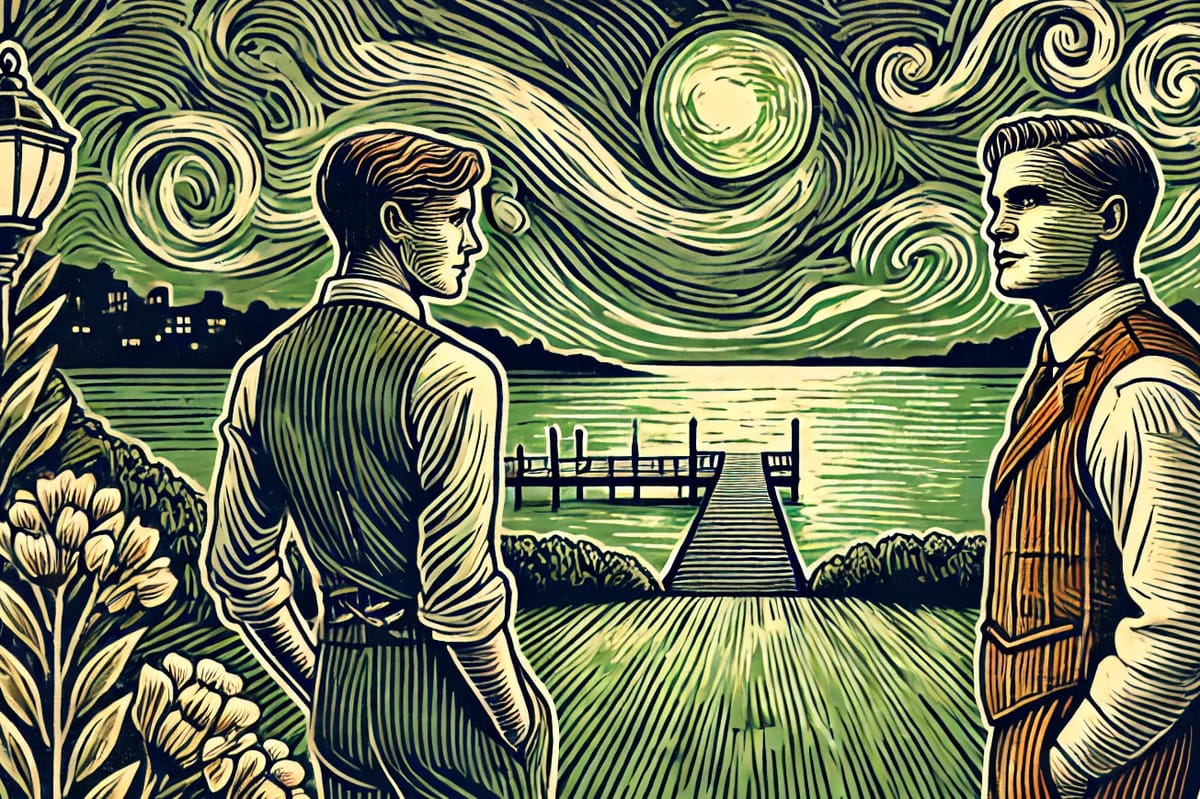
On community, friendship, and the courage to show up for each other
Last week, The Wild Gentleman Book Club met for the first time (some details on next month can be found here).
It was an amazing night of good company and conversation. When I started this project, building a community and a space for men to get together and talk with other like-minded men was one of my top priorities. Community is key to The Wild Gentleman.
Seeing that come to life last week was indescribable. Our chat focused loosely around themes from The Great Gatsby. One thread, in particular, centered on the nature of friendships and male relationships—perfect, since the whole idea of getting together in person was not only to discuss the book but to grow our social circles and connect with other men.
I’ve been thinking more about friendships among men since last week—the nature of narrator Nick Carroway’s and Jay Gatsby’s relationship in the book was covered quite a bit at the meeting.
At the same time, the topic of community and friendship among men appeared in the broader discourse. Scott Galloway covered it in his No Mercy/No Malice blog, “Friending,” and male relationships were pinpointed as both the cause and the cure for the concept of “Mankeeping” in a recent The New York Times article.
The Male Friendship Crisis
Galloway, who's been leading conversations on male relationships, recently shared a startling statistic: 15% of men today say they have zero close friends. Zero. A five-fold increase since 1990.
Three decades ago, 55% of men could name at least six close friends. Today, only 27% can say the same.
These statistics aren't just numbers—they're the lived reality I see among the men in my circles, which is precisely why last week's Wild Gentleman Book Club meeting felt so significant.
Around the same time, Galloway posted his "Friending" blog, The New York Times author Catherine Pearson highlighted "Mankeeping"—the emotional labor women do for the men in their lives because, as Brooklyn therapist Justin Lioi explains, "straight male clients tell him that they rarely open up to anyone but their girlfriends or wives."
Both pieces sound the same alarm: Men are isolated, placing unsustainable pressure on their romantic relationships while settling for surface-level connections with other men. As Galloway puts it, "You're the average of your five closest friends. Never shut down the opportunity to meet and learn from new people." For Pearson, it's something deeper. "Men need to invest emotionally in friendships...Men need social connection. Men need to be vulnerable with other men."
The challenge is that you need to find and build those strong connections with five friends. You won’t find emotional richness together just by hanging out in the same social circles. This modern camaraderie is not working.
Thinking About Camaraderie versus Friendship
I have a bad habit of completely misunderstanding what certain words mean. (Classically, I argued in a graduate writing class that there was some sublime beauty in J.D. Salinger’s "For Esmé—With Love and Squalor," completely misunderstanding that “squalor” is well, squalor.)
"Camaraderie" was another word I'd misunderstood. I thought it meant close friendship. But camaraderie is just shared experience and good-natured fellowship—enjoyable but surface-level.
Friendship is different: mutual respect, genuine care, reciprocal vulnerability. True friends see each other's flaws and choose connection anyway.
The problem with modern male relationships is that we often mistake camaraderie for friendship and wonder why we feel unfulfilled or alone despite being constantly surrounded by other men.
Community Requires the Authentic Man
We need spaces where we can explore complex questions without knowing all the answers, where we can share the struggles we all have without being seen as weak, where we can support each other's growth without expecting anything in return, and where we can build friendships based on who we are, not what we do.
When I launched The Wild Gentleman, one thing that I knew would be vital was getting men together in an atmosphere that wasn’t about networking or building business contacts.
The small crew that gathered at Paddy's Public House for the inaugural Wild Gentleman Book Club meeting found exactly that. We came to discuss The Great Gatsby, but what emerged was exactly what I'd hoped to create: Deep, meaningful conversations among men.
We talked about Gatsby's need to achieve success (and whether it was performance or he actually did achieve something) and the ways both Gatsby and Nick mirrored our own struggles with authenticity. We explored Nick's loyalty to Gatsby. We discussed the difference between loving someone and loving the idea of them.
But the conversation went deeper. Reading Gatsby as thirty-, forty-, and fifty-somethings, we have had richer experiences, both good and bad. The Great Gatsby has some dark elements, and as complicated humans, we have some dark sides as well. Tom Buchanan’s overt racism and eugenicist fervor stood out more to me on this recent reading, not just because it is a distasteful reminder of pre-Holocaust thinking. As one of our group commented, “There seem to be a lot more Tom Buchanans in our world these days.”
Opening up, being candid, and being raw were powerful. As men, we acknowledged it isn’t easy or natural. But it is necessary, in particular, because the work of discussing love, sharing wisdom, and building community is essential work to fight the ills we see around us. Greed, overt in the tale of Gatsby, is one target we all wanted to combat.
Sitting around for a couple of hours, eating a few appetizers, getting to know each other more deeply, and discussing some issues with emotional weight was empowering. We were not experiencing a feint of camaraderie, we were building bonds of friendship.
Building Community in a Disconnected World
The statistics about the decline of male friendship aren't inevitable. The Wild Gentleman Book Club is one small experiment in creating space for authentic male connection. Literature gives us a framework for exploring complex questions. Meeting monthly creates accountability. The combination creates community.
This month, The Wild Gentleman Book Club is reading Viktor E. Frankl's Man's Search for Meaning— a book I have yet to read, but it seems like the perfect next step for men willing to explore what gives life significance.
We will be meeting at Paddy’s in early September to discuss the book and continue building connections. Please reach out if you want to take part.
(You can buy the book at The Wild Gentleman book shop.)
One evening of seeing the solution in action made it clear this is both good and necessary. Every guy who showed up Tuesday night was hungry for exactly what we created—thoughtful conversation with other thoughtful men.
The "mankeeping" conversation reveals a real problem—too many men are isolated, placing unsustainable pressure on their romantic relationships. For me, the solution is to build better support systems.
The world needs more wild gentlemen—men who are brave enough to be vulnerable, secure enough to grow, and committed enough to show up for each other consistently.
As Gatsby learned too late, that which we think we need to chase or capture— our green light across the bay, our Daisy—is often unfulfilling. What we really need might be next door or uncovered in a simple, real conversation: Friendship and the connection with other men willing to do the work of friendship.
The Wild Gentleman Book Club meets monthly in Newton, MA. We will be voting via Instagram on the date of our next discussion, featuring Viktor Frankl's "Man's Search for Meaning."
If you're interested in joining our community, email dennis@thewildgentleman.com.