Frankenstein - A Reader's Guide for The Wild Gentleman Book Club

Meeting #6 - Tuesday, January 20, 2026
"Learn from me, if not by my precepts, at least by my example, how dangerous is the acquirement of knowledge, and how much happier that man is who believes his native town to be the world, than he who aspires to become greater than his nature will allow."
The Wild Gentleman Book Club
After December's exploration of A Christmas Carol, we turn to one of literature's most complex masterpieces—a story written by a teenage woman that asks profound questions about masculine ambition, creation, responsibility, the sublime, and what happens when we pursue knowledge without wisdom.
Mary Shelley's Frankenstein is often reduced to Hollywood simplicity: a mad scientist and his monster. But the book is much more sophisticated and challenging. It digs into the role of what men owe to what they create, whether that's a scientific achievement, a business, a life, or a family. It's a story about the catastrophic consequences of ambition pursued without morality and intellect lacking empathy.
In our age of relentless innovation and disruption, of building fast and break things, Shelley tale offers a cautionary warning about the costs of unchecked ambition. Victor Frankenstein isn't evil—he's brilliant, idealistic, driven, and convinced his work will benefit humanity. Sound familiar?
Meeting Details
We are meeting tonight, Tuesday, January 20, 2026 at 6:00 PM, at Paddy's Public House in Newton.
Whether you've finished the entire novel, read selected chapters, or simply want to discuss the questions Shelley raises in her story, come ready for conversation. If you'd like to join us, you can find all the information here: The Wild Gentleman Book Club - Meeting #6.
You can also get a printable version of this reading guide here: Printable Reading Guide.
Why Frankenstein for Men in 2026?
Victor Frankenstein embodies a particular masculine failure that, unfortunately, remains as relevant today as it did in the 1800s: He creates something, then abandons it when it doesn't meet his expectations. He pursues his ambition with single-minded intensity, cutting himself off from family, friends, and emotional support. When faced with the consequences of his actions, he spirals into denial and blame.
Remarkably, Shelley, only 18 when she wrote this novel, understood something essential: Knowledge without wisdom is dangerous. Ambition without moral grounding is dangerous. And isolation—especially for men—is a corrupting poison.
For Wild Gentlemen — men committed to growth, wisdom, and authentic living —this book asks uncomfortable questions: Where has our ambition outpaced our capacity for responsibility? When have we pursued achievement at the cost of connection?
Discussion Guide
Key Themes to Consider
1. The Danger of Learning Without a Moral Compass
Victor's education is brilliant but unbalanced. He learns how to create life but never stops to ask whether he should or what responsibilities come with that power.
The creature himself grasps what Victor never does. In Chapter 13, he reflects: "Oh, what a strange nature is knowledge! It clings to the mind, when it has once seized on it, like a lichen on the rock."
Knowledge transforms permanently—it can't be unlearned. This is why the direction of that knowledge matters so deeply. The creature learns about virtue and greatness, but without a guide or community to channel that learning, his education becomes a source of pain rather than enlightenment.
Questions to explore:
- In what areas of your life have you pursued an end without thinking about personal responsibility?
- How do we balance ambition and innovation with ethical consideration?
- What role do mentors and the community play in providing moral grounding for our pursuits?
2. The Monster We Make Through Rejection
Shelley's genius is showing us that the creature isn't born a monster—he becomes one through repeated rejection and isolation. When he reads Paradise Lost, he identifies with both Adam and Satan.
The creature is eloquent, capable of learning, and desperate for connection. But every person he encounters rejects him based on appearance. This rejection transforms him.
Questions to explore:
- How do we create "monsters" through our rejection—in our children, employees, or communities?
- What happens when we judge people by surface appearances rather than character?
- How much responsibility do we bear for how others turn out based on how we've treated them?
3. Male Isolation and the Refusal of Help
Throughout the novel, Victor isolates himself. He works alone on his creation, hiding his project from everyone. After the creature comes to life, he tells no one what he's done. Even when people he loves die because of his choices, he remains silent.
This isolation compounds every problem.
Questions to explore:
- Why do men so often isolate when facing problems?
- What keeps you from asking for help or admitting mistakes?
- Who in your life do you trust enough to be vulnerable with about your failures?
4. The Creature's Education: Learning What It Means to Be Human
The creature's deepest desire isn't revenge—it's virtue. "To be a great and virtuous man appeared to be the highest honor that can befall a sensitive man" (Ch. 13). He wants what the Wild Gentleman seeks: to be both sensitive and strong.
But observing the De Laceys suffer, he asks: "If such lovely creatures were miserable, it was less strange that I, an imperfect and solitary being should be wretched. Yet why were these gentle beings unhappy?" (Ch. 12)
Questions to explore:
- What does it mean that the creature's highest aspiration is virtue, not power?
- How does sensitivity become a strength or vulnerability?
- What role has reading played in shaping your understanding of being a good man?
5. The Rare Moments of Doing Right: Listening as Compassion
One of the novel's most important moments comes in Chapter 10, when Victor agrees to hear the creature's story. He explains his reasoning: "I determined at least to listen to his tale. I was partly urged by curiosity, and compassion confirmed my resolution."
This is Victor's finest moment —perhaps his only moment of genuine moral courage. He overcomes his revulsion, his fear, his desire to flee, and he listens.
It's a small act, really. Just listening.
Questions to explore:
- How often do we need to simply listen—to our children, partners, employees, friends—when our instinct is to judge/flee/defend?
- What would have changed if Victor had maintained this listening stance throughout the novel?
- Who in your life needs you to listen with compassion rather than judgment?
6. Nature as Restoration and Perspective
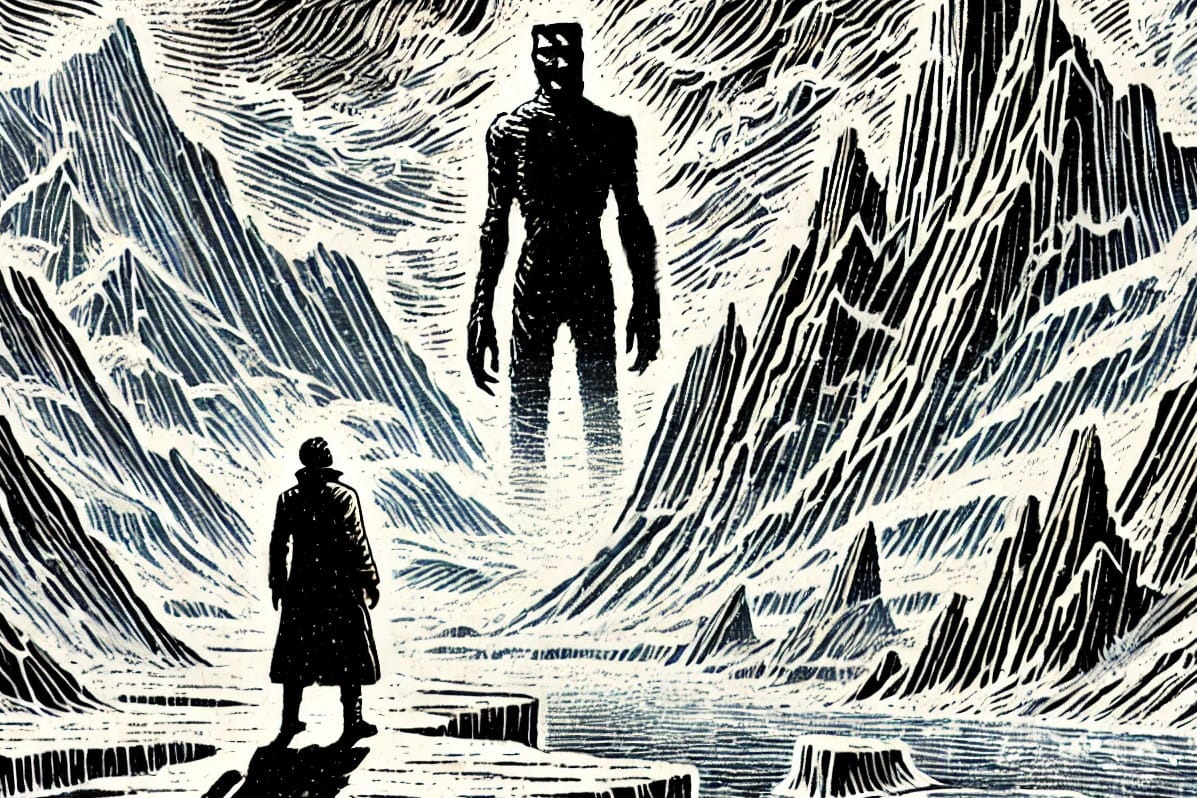
Before meeting the creature, Victor visits Montanvert, where he describes the sublime landscape: "It had then filled me with sublime ecstasy that gave wings to the soul" (Chapter 10).
Throughout the novel, Shelley uses nature as both refuge and perspective-giver. When human relationships fail, when guilt becomes overwhelming, when confusion reigns—nature offers restoration.
Questions to explore:
- What role does nature play in your own restoration and perspective?
- How might regular connection with nature provide the grounding that prevents some of Victor's worst decisions?
Passages Worth Discussing
On the responsibility of creation: "I had worked hard for nearly two years, for the sole purpose of infusing life into an inanimate body... but now that I had finished, the beauty of the dream vanished, and breathless horror and disgust filled my heart."
On isolation: "If the study to which you apply yourself has a tendency to weaken your affections, and to destroy your taste for those simple pleasures in which no alloy can possibly mix, then that study is certainly unlawful."
Victor's warning: "Learn from me, if not by my precepts, at least by my example, how dangerous is the acquirement of knowledge."
Looking Ahead
For February's meeting, we'll be reading something that brings warmth to the coldest month—details to be announced. We'll continue exploring questions of character, responsibility, and what it means to live well.
Please share any suggestions: dennis@thewildgentleman.com
Final Thoughts
Mary Shelley wrote Frankenstein during a dark summer in Switzerland, surrounded by literary luminaries who challenged her to write a ghost story.
She created a masterpiece that continues to haunt us because it touches something essential: Our fear that we might create damage we can't undo, that our ambitions might destroy what we love, that we might be—or create—monsters.
For Wild Gentlemen, this book makes clear the importance of community and connection, and confirms the dangers of isolation. It challenges us to think about what we're building, whom we're accountable to, and what wisdom means beyond mere knowledge.
Tonight, bring your marked-up book, your favorite passages, and your honest reflections on where you see yourself in both Victor and his creation. Because the uncomfortable truth is: We're both.
The Wild Gentleman Book Club
Where thoughtful men gather to explore literature, meaning, and authentic masculinity.
Wild at Heart. Refined in Mind.