Newsletter #6 - On Finding Time to Read

Updates
We have our fifth in-person meeting of The Wild Gentleman Book Club scheduled for Tuesday, December 16, at 6 PM at City Streets Restaurant in Waltham.
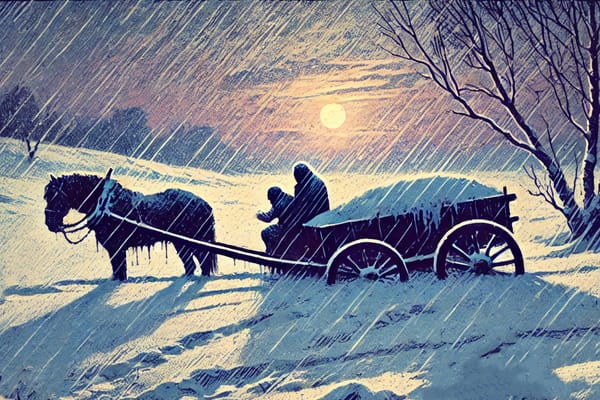
The book club selection for December is Charles Dickens's A Christmas Carol—a holiday classic on priorities, redemption, and trying to figure out where true value lies.
If you're planning to join us, RSVP here: The Wild Gentleman Book Club - Meeting #5 - A Christmas Carol
As for next month, the January selection will be Mary Shelley's Frankenstein. I am finalizing details on the date and location for the January meeting. If you have suggestions for books that explore themes of character, purpose, and what it means to be a good man, send them my way at dennis@thewildgentleman.com.
Read on.
Latest Blog Posts
This month has been focused on completing this newsletter and preparing for our December discussion of A Christmas Carol.
Look for a new post being published this week: "A Christmas Carol: A Reader's Guide for The Wild Gentleman Book Club" to prepare for tomorrow night's discussion. I think every time I dig into Dickens's story centered on Scrooge's redemption, it makes me evaluate just how much good I am really putting out in the world on a day-to-day basis.
I'm also working on a few longer pieces on friendships, and on attention and presence—how the quality of our focus shapes the quality of our lives. More on that soon.
The Wild Gentleman Book Club
This Tuesday, December 16 | 6:00 PM | City Streets Restaurant, Waltham
Discussion of A Christmas Carol by Charles Dickens
The book club is open to anyone interested in discussing life and books, or simply connecting with other thoughtful men. As one of the book club members describes it, "Very much not performative. Nobody's trying to impress anyone."

Last month's discussion of A Swim in a Pond in the Rain led to fascinating conversations about managing our precious time, death, how we show up for others, and how we read. George Saunders's insights on paying careful attention resonated deeply, especially his point that how we read a story reflects how we read a situation, a relationship, a moment.
This month, we're reading Charles Dickens's A Christmas Carol. It's short (under 100 pages), accessible, and deceptively profound. Even if you're still working through it, join us. The audiobook is also excellent—here's the version on Audible (read by Hugh Grant) and a Spotify one (Orson Welles and Lionel Barrymore).
Even if you haven't finished the book but want to experience what has been, for many of us, one of the highlights of recent months, please join us. These gatherings continue to exceed expectations.
Please RSVP here: The Wild Gentleman Book Club Meeting
This month's selection feels particularly relevant as we close out the year. Scrooge's transformation isn't about becoming a different person—it's about recognizing what actually matters before it's too late.
As I see it, being a good man often means taking action—what to do, how to achieve it, where to direct our energy. But A Christmas Carol provokes a different focus: What are we actually doing with our time?
On Finding Time to Read (And Why We All Struggle With It)
One conversation that stuck with me from our last in-person book discussion centered on balancing our responsibilities (and aspirations) with what we felt was a necessity (as a good man or a rounded human) to appreciate art, culture, and, too often neglected, the natural world that surrounds us.
The question was posed: "How do you find the time to read?" I felt I had that figured out when we met last month, confident in squeezing out early-morning or late-night pages. Since then, I'm not as confident that I have a good habit of finding time to read.
Someone mentioned they had barely finished the book we were discussing, and another said they had only picked through certain sections. It wasn't an admission of not living up to the book club's values. Not because they weren't interested, but because life kept getting in the way. Work deadlines. Family obligations. The yearning to relax after a long day.
The truth is, we recognized that this aspect of our modern lives was similar. Here we were, professionals who manage complex projects, raise families, and navigate demanding careers—and we were all confessing the same struggle: We can't seem to protect 30 minutes a day for something we actually want to do.
The Paradox of Reading in the Modern Age
Here's the uncomfortable truth: We live in an age where information is more accessible than ever, yet deep reading feels increasingly impossible. We're drowning in content but starving for wisdom. We scroll through hundreds of posts, try to read as much of each week's New Yorker as we can, but still often struggle to meditate on a single page.
The truth is, I write a newsletter about thoughtful masculinity and the transformative power of literature, yet I battle the same demons as everyone else. Some weeks I can check off one or two books; other weeks the pile of half-read or unread books grows exponentially, my mind wandering to emails, to-do lists, and essential family priorities.
This isn't a failure of willpower. It's a problem that might be solved with some shared wisdom and a few tips.

What the Experts Say
Cal Newport, the Georgetown professor and author of Deep Work and Slow Productivity, argues that our inability to concentrate isn't just about checking our phones—it's about the residual attention that lingers when we switch tasks. When you move from work to reading, part of your brain remains stuck thinking about that presentation tomorrow. Newport suggests scheduling specific blocks of time for deep focus and treating that time with the same respect you'd give a crucial meeting.
Ryan Holiday, who reads somewhere between 100-250 books annually, offers surprisingly simple advice. He recommends carrying a book with you everywhere and reading whenever you get a spare moment—treating reading not as something you do when you "have time," but as a default activity. Holiday owns a bookshop, shares his monthly recommendations, and considers money spent on books as essential expense. What sets him apart from us mere mortals? He makes time for what he truly values.
Seth Godin, the marketing savant and prolific newsletter writer is also a voracious reader. For Godin, the key is recognizing that in our attention-fragmented world, the ability to focus intensely is becoming both increasingly rare and increasingly valuable. Find a way to do it anyway.
The Practical Reality
But here's where theory butts up against reality. Most of us have jobs, families, and responsibilities. Even those mentioned above admit they sometimes fall short of their goals.
So what actually works?
- Start Small
Don't commit to reading an hour a day. That's setting yourself up for failure. Commit to reading one page. Just one. Some days, one page will turn into thirty. Other days, it'll stay at one. Both outcomes are fine. The goal is consistency, not heroics.
- Protect the Margins
The margins of your day—the ten minutes before a meeting, the twenty minutes on the train, the few minutes before bed—add up. Take Ryan Holiday's advice to carry a book and read it every time you get a spare moment. It's not about finding large blocks of time; it's about using the fragments you already have.
- Experiment with a Mini-Digital Detox
Put your book on your pillow in the morning so it's waiting for you at night. Delete social media apps from your phone. Not forever—just for a week. See what happens.
- Accept Imperfection
Some books will take you three weeks. Others will take three months. Some you'll need to abandon entirely. (Giving up on a book is incredibly hard for me.) But this is not failing. The goal isn't to consume literature at maximum efficiency—it's to engage with ideas that expand how we see the world.
Why It Matters
As we kept discussing this yearning for more time to read (or do the other things we love), we came to the realization that we we were really exploring was how to live intentionally versus reactively.
Books don't just entertain us—they give us language for many experiences we sometimes misperceive as our singular, internal struggles. They offer frameworks for understanding ourselves and our place in the world.
In The Christmas Carol, the tragedy of Scrooge isn't that he's successful. It's that he's spent his whole life chasing and valuing the wrong things.
Scrooge's transformation isn't about finding more hours in the day. It's about recognizing which hours matter.
And if you're struggling to find time to read A Christmas Carol before our meeting?
Start with one page.
The Gentleman Shares - Recent Thought-Provoking Reading
"How to Read More Books: The Simple System I'm Using to Read 30+ Books Per Year" - James Clear
The author of Atomic Habits breaks down his straightforward approach to reading more: Stop reading books you don't enjoy, always carry a book, and quit books freely.
"What Makes Goethe So Special" - Merve Emre, The New Yorker
I didn't know much about the German poet, other than his writing of Faust, but this breakdown shows a man striving to figure out, for better or worse, how a life should be lived.
"Frankenstein is Not Your AI Metaphor" - Katie Parrott, Every
This is one of the reasons I want to dig into Mary Shelley's famous tale—specifically, how the character is used as a technological bogeyman, seemingly with the launch of any innovation. However, I recently learned that Shelley was a teenager when she wrote the book. Wow.
How to Help The Wild Gentleman
Keep sharing ideas, book recommendations, blog topics, and feedback to dennis@thewildgentleman.com
Spread the word! If The Wild Gentleman resonates with you, share it with other men who might benefit. Here's the signup link: The Wild Gentleman Newsletter
The community we're building depends on thoughtful people willing to engage deeply. If that describes you (and I think it does), help us grow.
Until next month—keep reading, keep questioning, keep doing the things that scare you a little.
Wild at Heart. Refined in Mind.
Dennis