The Old Man and the Sea: A Reader's Guide for The Wild Gentleman Book Club

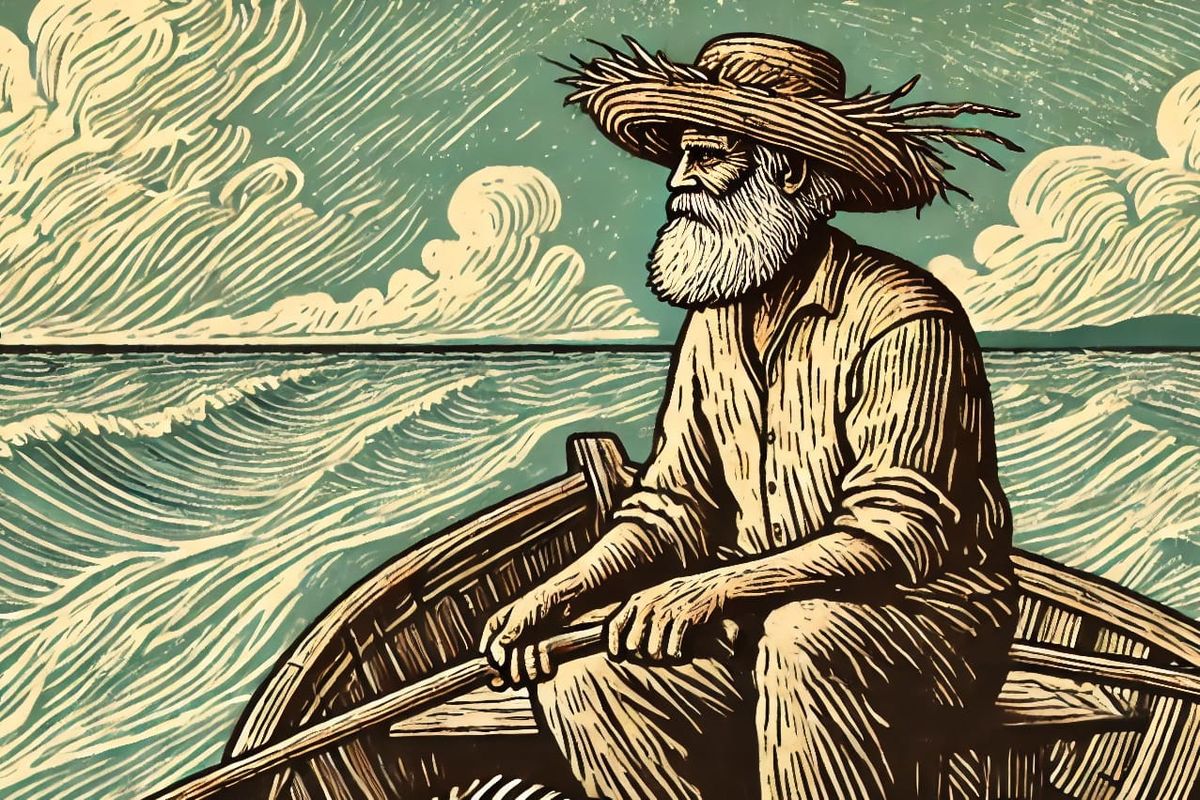
Meeting #3 - October 15th, 2025
"But man is not made for defeat. A man can be destroyed but not defeated."
The Wild Gentleman Book Club
After exploring Viktor Frankl's meditation on finding purpose last month, we turn to Hemingway's acclaimed novella about the epic struggle of an old Cuban fisherman. On the surface, The Old Man and the Sea is a story about catching a fish, but deeper exploration finds a fable filled with questions about aging, dignity, solitude, and what it means to persevere when all you have is yourself, belief, and determination.
Meeting Details
We are meeting on Wednesday, October 15, at 6 PM, upstairs at Paddy's Public House in Newton. Whether you've read this book before (perhaps in high school) or you're discovering it for the first time, you'll find that Santiago's story hits differently when you're no longer a young man yourself.
Details for this book club meeting have been shared via this newsletter, The Wild Gentleman Instagram account, and through private email. If you'd like to join us, you can find all the information here: The Wild Gentleman Book Club - Meeting #3.
You can also get a printable version of this reading guide here: printable Reading Guide.
Why The Old Man and the Sea for Men in 2025?
I'm sure many of us—successful in career, fatherhood, leadership, and other areas of life—find ourselves asking: "What happens when my best days are behind me?"
Santiago has been 84 days without a fish. He's gone from a respected fisherman to an object of pity and scorn. The boy who once fished with him has been ordered by his parents to work on a luckier boat. As Hemingway beautifully puts it, Santiago's sail is "patched with flour sacks and, furled, it looked like the flag of permanent defeat."
And yet.
He goes out again, hooking an enormous fish that begins a three-day ordeal—and a battle with mythically monstrous sharks— that tests his beliefs, confidence, and, to some degree, his capacity to survive. Hemingway is a master of short, punchy prose that captures something essential about masculine resilience—not the loud, performative kind, but the quiet determination to meet your fate with dignity.
For men navigating aging, professional transitions, the loneliness of modern life, or the question of what we have to offer the next generation, Santiago's journey offers a different model of strength: One rooted in endurance, acceptance, and grace under pressure.
Discussion Guide
1. Key Themes to Consider
- Dignity in Aging -Santiago represents a model of masculine aging rarely celebrated in our youth-obsessed culture. He's not trying to prove he's still young—he knows exactly who he is and what he can do. And yet his sense of self-worth remains intact.
- "He was too simple to wonder when he had attained humility. But he knew he had attained it and he knew it was not disgraceful and it carried no loss of true pride."
- What does graceful aging look like for men in a culture that equates worth with productivity and youth?
- Solitude vs. Loneliness - Santiago is profoundly alone—but is he really? He speaks to the fish, to the birds, to the sea itself. His solitude becomes almost spiritual, a space for reflection and connection with something larger.
- "No one should be alone in their old age, he thought. But it is unavoidable."
- Mentorship and Legacy - The relationship between Santiago and Manolin is one of literature's most touching depictions of mentorship. The boy loves the old man not for what he can provide, but for who he is. Santiago, in turn, wants nothing more than to pass on what he knows—not just about fishing, but about how to live.
- This is the type of mentor relationship that was the focal point of the recent post, "In Search of a Mentor."
2. Reading Questions
On Aging and Masculinity
- How does Santiago's model of aging masculinity differ from the cultural messages we receive about staying young, staying relevant, staying productive?
On Solitude and Connection
- How does the masculine ideal of self-sufficiency sometimes prevent us from the connections we actually need?
On Mentorship
- Who are the younger men in your life who might benefit from your experience, even (or especially) when you feel past your prime? What skills and knowledge are we passing down to the next generation?
- How do we mentor in an age where formal mentorship feels awkward or rare between men?
Textual Questions
1. How does reading this book as an adult differ from reading it (or being assigned it) in high school? What stands out now that didn't before?
2. The relationship between Santiago and the boy is tender in a way that's rare in literature about men. What does the boy's defiance of his parents to care for Santiago tell us?
3. Santiago repeatedly calls the fish his brother, respects him, loves him—and still kills him. How do you understand this? What are the "worthy opponents" in your life that you respect even as you struggle against them?
4. Are the sharks villains, nature taking its course, or a metaphor for something deeper in life that Hemingway wants us to come to a conclusion about on our own?
5. Santiago returns with nothing but the skeleton in the final pages of the story. Does this make this tale a tragedy? A triumph? Both?
6. Santiago reflects: "I may not be as strong as I think... But I know many tricks and I have resolution." How does this conception touch on ideas of what strength and manliness mean in relation to age?
7. At the end, despite everything, Santiago still has, and has maybe even added to, his legacy as a fisherman. The boy seems to hold him in higher regard. He has not lost what matters most. Have you ever achieved something, lost it, yet kept what truly mattered?
Looking Ahead
For November's meeting, we're reading the best book I encountered this year: A Swim in a Pond in the Rain by George Saunders.
Ostensibly, it is a guide to Russian short stories; however, it's actually a masterclass in creativity, craft, and how to live a thoughtful life.
(And yes, The Wild Gentleman takes its name from a character in one of these stories.)
I'll be sharing a poll for December's selection via Instagram this week.
Final Thoughts
Hemingway wrote this book when he was past fifty, knowing his own best days of physical strength were behind him. Santiago's story is about what remains when youth fades: Skill, dignity, purpose, and the relationships that matter.
This is not a book about catching fish. It's a book about how we face our limitations, our defeats, our inevitable decline—and how we find meaning in the struggle itself.
In a culture that bombards young men with messages about dominance, aggression, and never showing weakness, Santiago offers a different path: Quiet competence, patient endurance, and the dignity of meeting one's fate without performance or pretense.
Wednesday night, we're asking: What does it mean to be a man when strength, performance, and productivity fade? And how do we pass on what we've learned to those coming after us?
Bring your marked-up book, your honest questions, and your willingness to sit with the uncomfortable truths about aging, solitude, and what it means to keep fishing even when the catches aren't coming.
See you at Paddy's.
The Wild Gentleman Book Club. Where thoughtful men gather to explore literature, meaning, and authentic masculinity.
Wild at Heart. Refined in Mind.