A Christmas Carol: A Reader's Guide for The Wild Gentleman Book Club

Meeting #5 - December 16th, 2025
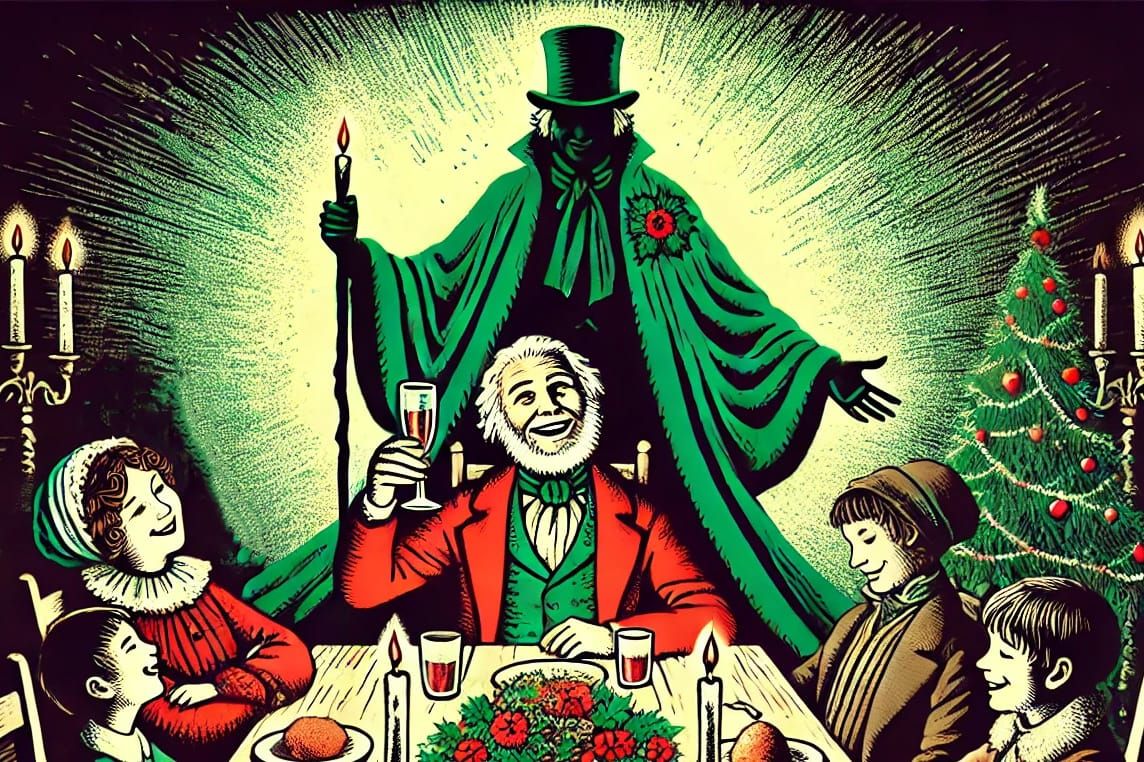
"He has the power to render us happy or unhappy; to make our service light or burdensome; a pleasure or a toil. Say that his power lies in words and looks; in things so slight and insignificant that it is impossible to add and count them up: what then? The happiness he gives is quite as great as if it cost a fortune."
The Wild Gentleman Book Club
After we explored the Russian short story masters in George Saunders's A Swim in a Pond in the Rain last month, we shift to something more seasonal—a classic holiday story that focuses on how any man can determine what truly matters in life. Charles Dickens's A Christmas Carol is a short, significant tale that continues to influence our sense of holiday celebration and the importance of looking beyond ourselves in winter.
On the surface, this is a holiday tale about redemption. But deeper exploration reveals a meditation on priorities, presence, and the question that haunts many men: What actually matters?
Dickens understood something essential about masculinity that our age often forgets: True power lies not in accumulation or control, but in the ability to render others happy through small acts of attention and generosity. Fezziwig, the "He" in the passage above, demonstrates this perfectly—his influence comes not from wealth but from creating joy through "things so slight and insignificant" that they can't be counted.
Meeting Details
We are meeting tonight, Tuesday, December 16, at 6 PM at City Streets Restaurant in Waltham (411 Waverley Oaks Rd). Whether you've finished the entire book, read a few of the chapters, listened to one of the audio renditions, or simply want to discuss the ideas Dickens raises about how we spend our lives, come ready for conversation.
Details for this book club meeting have been shared via this newsletter, The Wild Gentleman Instagram account, and through private email. If you'd like to join us, you can find all the information here: The Wild Gentleman Book Club - Meeting #5.
You can also get a printable version of this reading guide here: Printable Reading Guide.
Why A Christmas Carol for Men in 2025?
In our age of constant life optimization, career advancement, and the pressure to provide and perform, Dickens offers something wholly different: A story about a successful man who realizes he's been succeeding in areas of his life that really don't matter.
Scrooge has built wealth, maintained control of his business, and avoided emotional entanglements that might have slowed down his ambition. He's secured himself "against surprise." He understands the goals of his trade and keeps it his singular focus. Sound familiar?
Dickens, whose sheer writing ability and creativity can be hard to appreciate because of how well know this tale, doesn't simply condemn this approach—one which he railed against in many of his books. Dickens shows what living single-mindedly and without empathy for others can cost us. Through Marley's ghost, we learn the tragedy: "In life I was doomed to wander through the world and witness what it cannot share, but might have shared on earth, and turned to happiness!"
The men who attend these The Wild Gentleman discussions are men of action, committed to growth and wisdom—many of who have spent careers being decisive. But our discussions also ask many of the questions that A Christmas Carol asks: What if material success isn't the highest virtue? What in our lives actually matters most?
What we can get from engaging with this book are essential questions for thoughtful men navigating the tension between achievement and presence, between building a career and building a life, between being respected and being loved.
Discussion Guide
Key Themes to Consider
The Business of Being Human
Early in the story, Scrooge declares, "It's enough for a man to understand his own business, and not to interfere with other people's. Mine occupies me constantly."
But Marley's ghost returns to tell him: "Mankind was my business. The common welfare was my business; charity, mercy, forbearance, and benevolence were all my business."
Questions to explore:
- How do we define our "business" as men? It seems, with the hindsight of being dead for seven years have given Marley a different definition than he held in life.
- Do we, or have we, sometimes used the excuses of "I'm busy" or "work is demanding" to shield ourselves from moments when we might become vulnerable and make a greater impact with our partners, colleagues, friends, and family?
The Light We Try to Extinguish
In one of the book's most powerful metaphors, Scrooge tries to use the cap to cover the bright light shining from the Ghost of Christmas Past. The ghost responds: "What! Would you so soon put out, with worldly hands, the light I give?"
Dickens suggests we've built the very cap that dims our own light—that value of memory, feeling, connection, and, especially from our childhood, our naivité.
Questions to explore:
- Scrooge, as a child, loved stories and imagination—and yet, this seems wholly absent in his life as an adult. Did this scene make you reflect on things you may have lost over time due to a need to be practical?
The Power of Small Acts
The Fezziwig scene is crucial. After watching his former master create joy through a simple Christmas party, Scrooge reflects on power: Fezziwig "has the power to render us happy or unhappy..."
This is a revolutionary definition of masculine power—not dominance, but the ability to create conditions for others' flourishing.
Questions to explore:
- Where do you have Fezziwig's kind of power—as a father, partner, boss, mentor?
- What "slight and insignificant" acts could you commit to that you have ignored?
- Who created joy for you the way Fezziwig did for young Scrooge?
Presence Beyond Circumstances
The scene at the Cratchits is remarkable for its joy despite poverty. Bob Cratchit has every reason to be bitter—low wages, a sick child, precarious circumstances. Yet Dickens shows us a family rich in what matters: Family, laughter, and love.
Even more striking: When Bob toasts Scrooge, the family's joy isn't thoroughly dampened. They refuse to let resentment ruin their celebration.
Questions to explore:
- How much of your happiness do you make conditional on circumstances improving?
- Are you waiting to be happy until you achieve X, Y, or Z?
Laughter as Resistance
At his nephew's house, Scrooge witnesses something he'd dismissed as foolishness: unrestrained joy. Dickens writes: "There is nothing in the world so irresistibly contagious as laughter and good humor."
For many men, especially as we age, laughter becomes something we've lost. We become too serious, too focused.
Questions to explore:
- Who in your life is like Scrooge's nephew—stubbornly joyful despite your resistance?
Ignorance and Want: The Children We Create
Near the end, the Ghost of Christmas Present reveals two wretched children hidden under his robe: Ignorance and Want. "They are Man's," the ghost says. "And they cling to me, appealing from their fathers."
This haunting image suggests we create these conditions through our choices—through what we ignore, through the wants we fail to address.
Questions to explore:
- The ghost says "beware them both, and all of their degree, but most of all beware this boy [Ignorance]"—why is ignorance more dangerous than want?
Looking Ahead
For January's meeting, we're reading Mary Shelley's Frankenstein—meeting—another story about creation, responsibility, and what we owe to what we bring into the world. Meeting date and location to be announced.
Like A Christmas Carol, it's a story often reduced to pop-culture simplification, but that reveals profound questions about masculinity, ambition, and the consequences of our choices.
Final Thoughts
Dickens wrote A Christmas Carol in six weeks, driven by financial need and moral urgency. He wanted to write something that would make people think about how to live better lives. How do we treat the people around us? What are we building toward?
For Wild Gentlemen—men committed to wisdom, growth, and authentic living—this book offers a few essential challenges.
This Tuesday, we're asking: What life are we actually living versus the life we could be living? What small acts of presence and generosity are we overlooking because we're focused on bigger things? And if we woke up tomorrow with "time before us," what would we do differently?
Bring your marked-up book, your favorite passages, and your honest reflections on where you see yourself in Scrooge's journey.
See you at City Streets Restaurant.
The Wild Gentleman Book Club. Where thoughtful men gather to explore literature, meaning, and authentic masculinity.
Wild at Heart. Refined in Mind.