Ishmael: A Reader's Guide

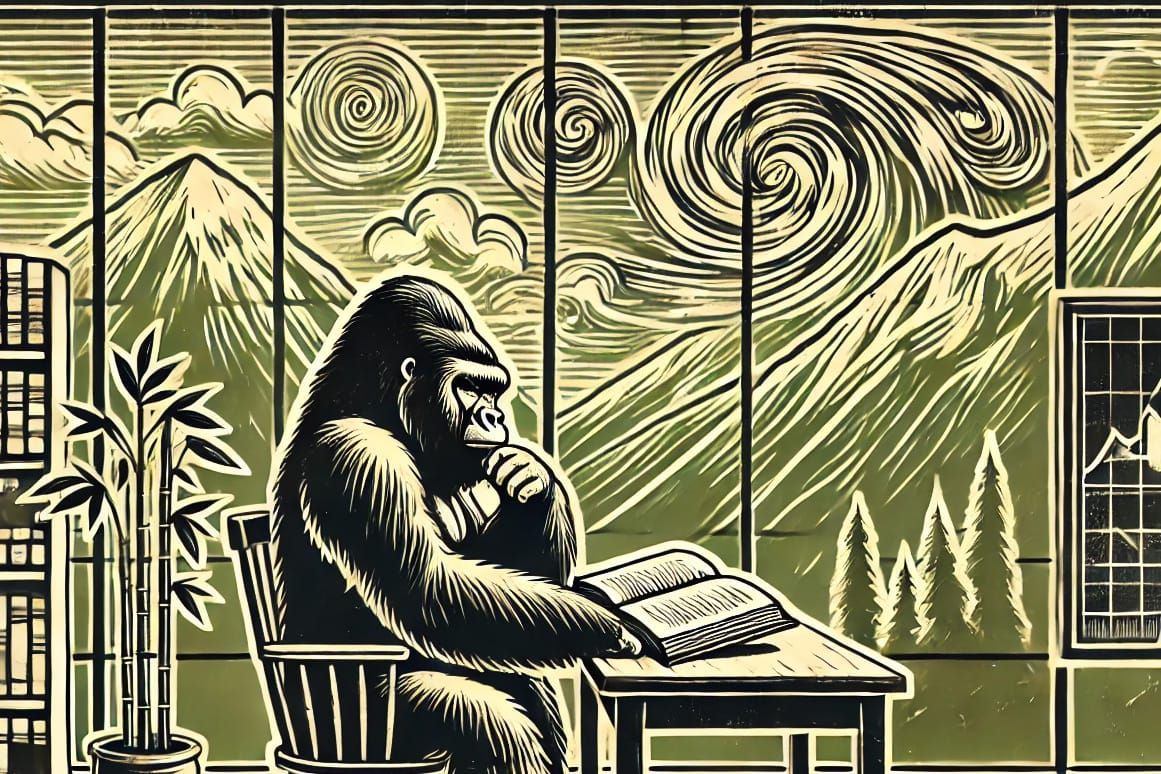
Meeting #7 - Tuesday, February 17, 2026
"You hear this fifty times a day. You can turn on the radio or the television and hear it every hour. Man is conquering the deserts, man is conquering the oceans, man is conquering the atom, man is conquering the elements, man is conquering outer space...The mythology of your culture hums in your ears so constantly that no one pays the slightest bit of attention to it. Of course, man is conquering space and the atom and the deserts and the oceans and the elements. According to your mythology, this is what he was born to do."
The Wild Gentleman Book Club
At our January TWG Book Club meeting, after discussing Mary Shelley's Frankenstein, we started talking about which book to read next. Ari, a regular at the monthly meetings, made an impassioned case for reading Ishmael.
Most of us had never heard of the book, which, as we decided once we met in February, is best described simply as, "what a man in search of a teacher learns about our world and culture revealed by a giant, telepathic gorilla." As someone added, "Better not go any deeper than that."
But we did, and it was a fascinating conversation. I never shared the reading guide for our February meeting, so I wanted to make sure to share it here.
You can also get a printable version of this reading guide here: Printable Reading Guide.
Ishmael Meeting Details
We met on Tuesday, February 17, 2026, at Paddy's Public House in Newton.
We have our next The Wild Gentleman Book Club meeting this Wednesday, March 18, at 6 PM at Paddy's Public House in West Newton. We will be talking about George Saunders's recent book, Vigil. This is a short novel that can be read in a day or two; it's also a good listen on Spotify or Audible. Even if you don't read it, come for community and good conversation.
If you'd like to join us, you can find all the information here: The Wild Gentleman Book Club - Meeting #8.
How Ishmael Can Guide Men in 2026
Ishmael is formatted in dialogue style — like getting back into your Plato — and explores the stories we have told (and continue to tell) ourselves about civilization, progress, and what it means to be human. At the book club, we dug into how the book uncovered new ways of looking at our place in the world and how we accept "received" wisdom about success, growth, and masculinity without challenging it.
At this stage of life, many of us are reassessing our relationship to work, achievement, and legacy. Through this story, Quinn boldly shocks us out of our complacent acceptance of some of the foundational stories of humankind and implores us to examine the cultural mythology we've been living by. The aftereffects of confronting these significant world and societal norms can be felt as we question what we will leave behind as men, especially as we age.
This is a book isn't for everyone. It earns its weight through philosophy rather than plot. For some of us, it was revelatory, but a quick scan of online reviews reveals others find it simplistic or preachy.
At the end of the day, you don't need to agree with all the arguments Quinn makes, but the framework he reveals can help you think more clearly about the life you're living and what you will leave behind.
Our cultural story — that humans are the pinnacle of creation, meant to conquer and subdue the earth — is not a universal truth but one mythology among many. And it's a mythology that's destroying both us and the planet.
We're not doomed by human nature, but by a specific cultural story that began roughly 10,000 years ago with agriculture. Change the story, change the outcome.
Key Themes for Discussion
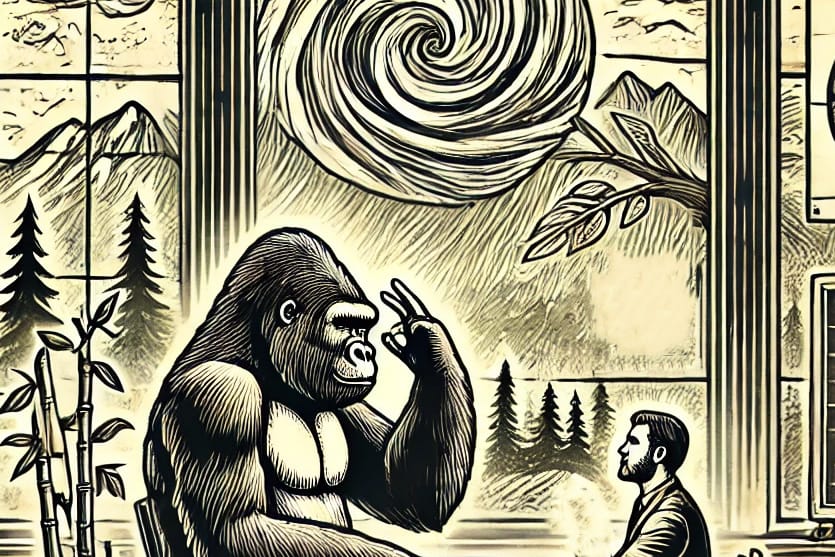
1. The Stories We Live By
Quinn argues that civilizations are held together by shared mythology — stories about who we are, where we came from, and where we're going. As the lessons unfold, Quinn (via Ishmael) divides humanity into two groups:
- Leavers: Those who live sustainably, taking only what they need. The closest parallel in our age is various indigenous peoples
- Takers: Agrarian civilizations (including ours) that believe they're exempt from natural law and entitled to unlimited growth
The Taker story holds that humans are separate from and superior to nature, meant to rule the world, and that progress means conquering the earth.
Ishmael challenges "our cultural story" — that humans are the pinnacle of creation, meant to conquer and subdue the earth. This story is not a universal truth but one mythology among many. And it's a mythology that's destroying both us and the planet.
Questions to consider:
- What cultural stories have shaped our understanding of success and being driven by goals? What about what it means to be a man in our current world?
- How does the narrative of "conquer and achieve" influence careers, businesses, and personal choices?
- As a good chunk of us are in what one would call "midlife," which of these inherited stories are you questioning?
2. Teacher and Student
The relationship between Ishmael and his student mirrors the mentor relationships many of us seek (or try to provide). Ishmael doesn't give answers—he asks questions that lead the student to discover truths himself.
Questions to consider:
- Who have been your most important teachers? What made them effective?
- When and how to play both roles, teacher or student, in different areas of your life?
3. Civilization and Its Discontents
Quinn suggests that the anxiety, depression, and the lack of meaning many of us experience in modern society stem from living a fundamentally wrong story about human purpose.
We're not doomed by human nature, but by a specific cultural story that began roughly 10,000 years ago with agriculture. Change the story, change the outcome.
Questions to consider:
- Does Quinn's diagnosis of the challenges of modern life resonate?
- Is it too late to simply "change the story"?
- Where in your own life do you feel the tension between the life you were told to build and the life that actually feels meaningful?
4. Masculine Dominance and Legacy
While Quinn doesn't explicitly critique a society seemingly defined by male domination and conquest, some of his focus on power and control seems to point to our predicament being the outcome of centuries of bad men ruling without thought of consequence.
Further, a key element of Quinn's point is that we are heading for an environmental collapse, which will be the legacy of modern culture. Quinn suggests that Taker culture has destroyed a genuine tribal community. Do you agree? Or do the bonds you've built — in family, friendship, this book club — represent something real and durable?
Questions to consider:
- How does the "Taker" mentality connect to traditional masculine values?
- What would a "Leaver" approach look like for someone striving to be a good man?
- Can you be ambitious, driven, and successful while rejecting the idea that those results come from dominating others?
- How do you balance personal ambition with collective responsibility?⠀
Passages Worth Marking
On Finding Answers
"It's the knowledge that you have to find out everything for yourself that makes the teacher necessary."
On the Taker Premise
"The premise of the Taker story is 'The world belongs to man.' ...The premise of the Leaver story is 'Man belongs to the world.'"
On Freedom
"You're captives of a civilizational system that more or less compels you to go on destroying the world in order to live."
Final Thoughts
Ishmael challenges us to question received wisdom — exactly the aim of this book club. When Quinn critiques the "Taker" mythology, he is taking aim at many of the ideas that we discuss that separate good men from those who think that more is always better, that dominance equals success, and that we should conquer rather than harmonize.
The Wild Gentleman asks:
- What if strength includes restraint?
- What if wisdom means questioning the cultural stories we inherited?
- What if authentic masculinity involves living in right relationship — to ourselves, to others, to the world?
The Wild Gentleman Book Club
Where thoughtful men gather to explore literature, meaning, and authentic masculinity.
Wild at Heart. Refined in Mind.
Please share any reading suggestions: dennis@thewildgentleman.com