The Unsettling of America - A Reader's Guide

Meeting #15 - Wednesday, October 21, 2026
Once our personal connection to what is wrong becomes clear, then we have to choose: we can go on as before, recognizing our dishonesty and living with it the best we can, or we can begin the effort to change the way we think and live. — Wendell Berry, The Unsettling of America
The Wild Gentleman Book Club
Last month, we met with a small crew and chatted about All the Pretty Horses.
Cormac McCarthy's book is a classic modern Western that tells the story of a group of young men (teens), searching for a way of life that is almost mythic and non-existent in their 20th-century Texas town. We had a great discussion about modern writing, whether the characters were actually deep or superficial, and a lot about our thoughts on life in the world right now.
The Unsettling of America Meeting Details
We will convene once again this month on Wednesday, October 21st, upstairs at 6:00 PM at Paddy's Public House in West Newton.
If you haven't come to a meeting in a while or haven't come at all, come and see what it's all about. Even if you didn't read the book, come for the company and good conversation.
This month's book, Wendell Berry's The Unsettling of America, was quite a challenge to read, but worth the effort. It's also available on Audible or Spotify.
Please join us. You can find more information and RSVP here: The Wild Gentleman Book Club - Meeting #15.
You can also get a printable version of this reading guide here: Printable Reading Guide.
What The Unsettling of America Teaches Men
Wendell Berry wrote this book in 1977, from his home farm in Henry County, Kentucky. Nearly fifty years later, it still reads as if it were written by a contemporary examining the unforeseen outcomes that could result from our culture's relationships with technology, banking, family life, and food.
At its heart, it is a passionate exploration of American and global agriculture. Berry spends time in his essays breaking down what happened to the land, the small farms, and the farm towns that took the government's advice — via the Secretary of Agriculture under Nixon and Ford, Earl Butz — to "get big or get out."
While centered on farming and short-term thinking about the land, you don't need to understand soil and husbandry to reap the benefits of the book. Berry’s real target is a culture that believes the future will always be better than the present, that measures success only in money, and that has lost its sense of belonging to family and community.
The title is the argument. Berry sees two impulses running through American history since the arrival of the first Europeans: Those who came to settle, to stay and make a life in one place, and those who came to take what they could and move on. The second impulse mostly won. Culturally, especially in urban centers, America built an economic engine and a myth of success around the tales of those who left farms, wilderness, and the country for idealized, better lives.
Berry draws the line most sharply in one of the book's best-known passages, the exploiter and the nurturer. His model exploiter is the strip miner; his model nurturer is the old-fashioned farmer. "The standard of the exploiter is efficiency; the standard of the nurturer is care. The exploiter's goal is money, profit; the nurturer's goal is health." The exploiter thinks in numbers and "hard facts." The nurturer thinks in "character, condition, quality, kind."
It is in the dichotomy between the exploiter and the nurturer that we find characteristics that many modern men tend to carry in equal measure. You can be a nurturer with your family and an exploiter at your job. "The crisis of community," Berry writes, "has its source in the corruption of character."
His other target is specialization, which has allowed knowledge of food, health, home, and community to be guided by experts and services. We think we have achieved freedom, health, and success, a wholeness, but we have only acquired more dependence on others, whose interests aren’t the same as ours. Berry's answer to specialization, and his challenge to take back more of our own lives: "To be healthy is to be whole."
In the chapter "The Body and the Earth," Berry writes about marriage, but not as a private romance. He sees it as a bond that ties a household to its community and its place. As he argues, modern life rests on "a series of radical disconnections between body and soul, husband and wife, marriage and community." To find belonging, you need to understand the intricate balance of the home, which is similar to the balance needed for life on a farm.
Discussion Guide
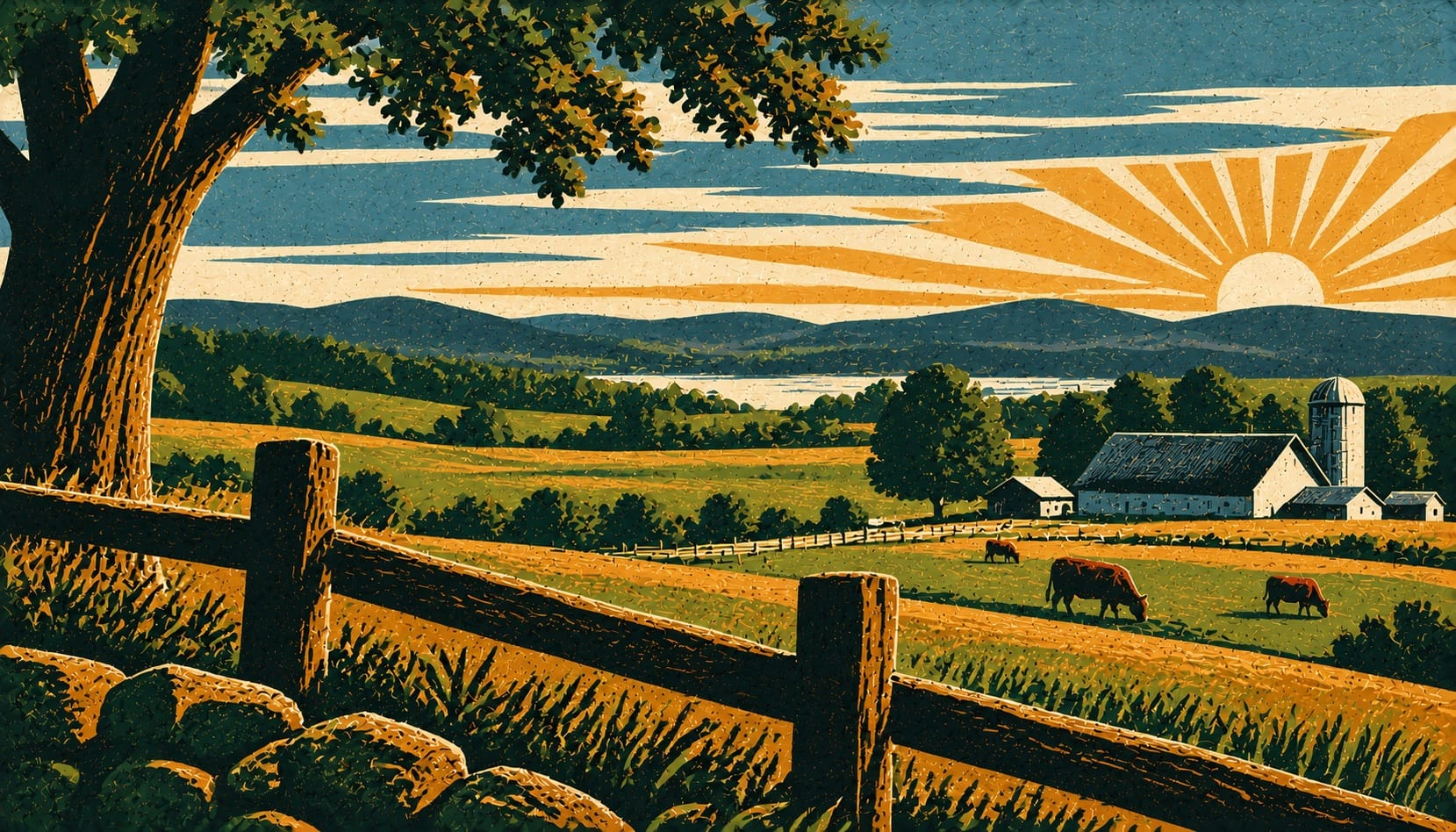
Note: This is a dense book, and it's nonfiction. If you didn't finish, read the chapters "The Ecological Crisis as a Crisis of Character" and "The Body and the Earth." You'll be able to hold your own in our discussion.
1. The Exploiter and the Nurturer
Berry's strip miner and farmer aren't really about occupations. They're two ways of standing in relation to the world: take what it yields, or tend it so it keeps yielding. Most men switch between them a dozen times a day without noticing.
Questions to explore:
- Berry says the exploiter's standard is efficiency and the nurturer's is care. Which one runs your working life? Which runs your home? Are they the same standard?
- Where in your own life are you mining something (your body, a friendship, a marriage, a place) instead of tending to it?
- Berry insists the crisis of community starts with character. Can you explain what he means? Do you buy the argument? Or is it too easy to blame the individual for the evils of large systems?
2. The Specialist
Berry's specialist is competent, well paid, and almost completely dependent on others and their products and inventions. He can do one thing very well and has handed off a generalist understanding of the world to experts. Berry thinks that trade has quietly cost us our wholeness as humans.
Questions to explore:
- What have you outsourced (a skill, a kind of care, a body of knowledge) that your father or grandfather did for himself? What were the trade-offs?
- "To be healthy is to be whole." What part of your life have you relegated to others or technology, and what would it take to bring it back?
- Most of us make a living by specializing in one way or another. How do you read Berry, and how do you defend your own approach? Should you quit your job and start farming?
3. Staying Put
The unsettled man is us. Especially in our modern age. Berry argues America was built by men who left, and that a man who never stays anywhere long enough to belong can't really take care of anything. In "The Body and the Earth," he carries the argument all the way home, to marriage and the household.
Questions to explore:
- When did you last leave something (a town, a job, a group of friends) for opportunity? When did you choose to stay? What did each choice cost?
- Berry ties the health of a marriage to the health of a household and a community. Do you see echoes of this in your own family and household?
- "If we do not live where we work and when we work, we are wasting our lives and our work too." Few of us can do that literally. What's the version of it that's actually available to a man living in the suburbs in 2026?
Final Thoughts
Berry never asks his reader to move to Kentucky and start farming. What he asks is more challenging: To gain awareness of our habits of taking and our habits of tending, and to see that a life tilted toward taking isn’t good for us (morally, mentally, physically) or the land in the long run.
The book is nearly fifty years old, and the unsettling it describes has only accelerated (see AI and its moral and environmental effects). To me, building community like The Wild Gentleman is an act of resistance. Let's make Wendell Berry proud.
The Wild Gentleman Book Club
Where thoughtful men gather to explore literature, meaning, and authentic masculinity.
Wild at Heart. Refined in Mind.