Where the Deer and the Antelope Play: A Reader's Guide
Meeting #10 - Wednesday, May 20, 2026
"My tasks involved the making of mistakes, then discovering how to resolve those errors without being an asshole, a search that I now understand will never end."
The Wild Gentleman Book Club
In April, the book club read Allen Levi's Theo of Golden.
We had a rich conversation about giving, creativity, and what it means to truly see another person. We questioned the pace and scope of the lives we lead that we've accepted as normal, and how we can change. Theo shows up to every bestowal in person, writes thoughtful handwritten invitations, and sits and listens without an agenda. He is the type of man we all seem to aspire to be.
This month, we return to Paddy's with a different kind of book — one that makes us laugh, one that pushes against the accepted norms of our society and systems, and one that inspires us to embrace the outdoor world that surrounds us.
Where the Deer and the Antelope Play Meeting Details
On Wednesday, May 20th, 2026, we will meet again at 6:00 PM at Paddy's Public House in West Newton for another in-person book club gathering.
New faces are always welcome — you don't need to have read the book to come. You just need to want to show up and enjoy good company, good conversation, and a beer or two (non-alcoholic brews are always on tap).
This month, we will read and discuss Nick Offerman's Where the Deer and the Antelope Play. It's also a great listen on Audible and Spotify — Offerman narrates it himself, and the experience of him lightly chuckling at his own jokes is genuinely delightful.
Please join us. You can find more information and RSVP here: The Wild Gentleman Book Club - Meeting #10.
You can also get a printable version of this reading guide here: Printable Reading Guide.
Lessons for Men from Where the Deer and the Antelope Play in 2026?
Nick Offerman is an actor, a serious woodworker, a speaker/comedian, and a writer. He's funny, a devoted husband, a lover of agrarian writer Wendell Berry, and not afraid to ask probing questions about the culture he is enmeshed with.
(He's also honest about the ways the book paints him as occasionally hypocritical — and he's fully aware of it. "Nuance" is a word that figures prominently in the book. That self-awareness is part of what makes the humor land.)
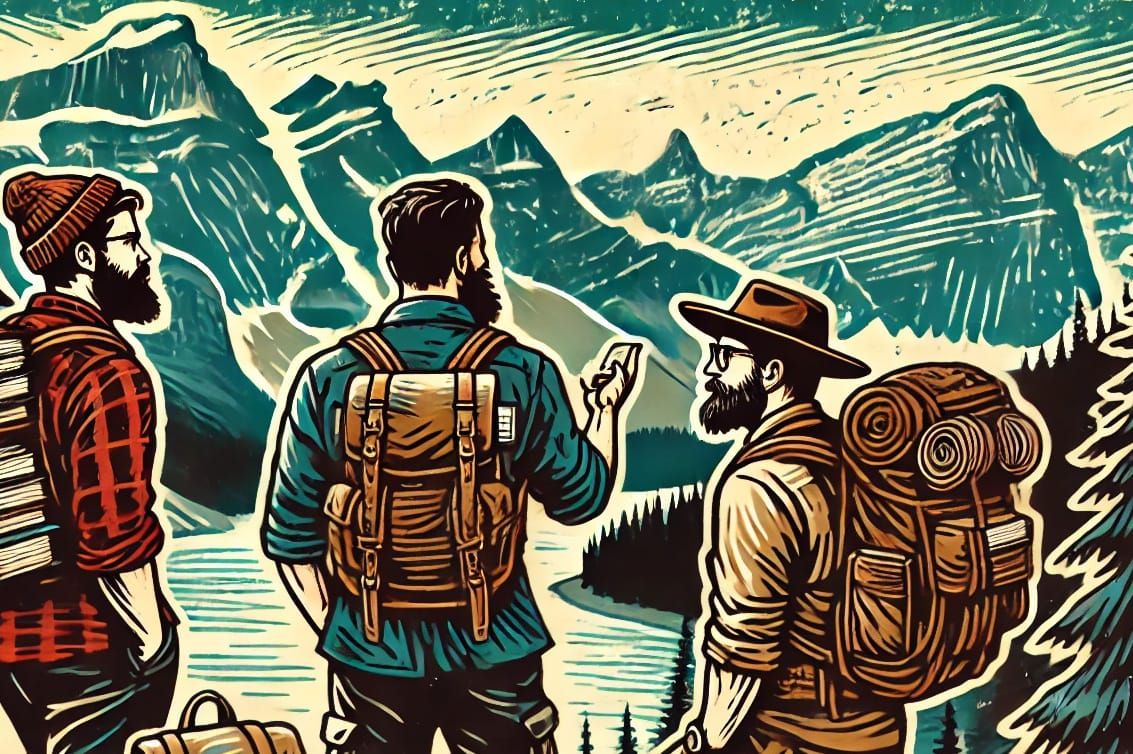
Where the Deer and the Antelope Play takes him on three journeys — hiking the Glacier National Park with famous friends Jeff Tweedy and George Saunders, traveling to the Lake District of northern England to experience farming with what he recognizes as decency and values that don't seem part of the "American-style", and on a post-COVID road trip across America. The through-line isn't the destinations. It's the question he keeps turning over from a different angle each time: What does it mean to live in right relationship with the land, with other people, and with yourself?
When we meet to discuss books, we very often dig into what makes a good man. Offerman is asking the same question: What makes a good life?
The answers: Slowing down, paying attention, enjoying quality food, sharing experiences with loved ones, and belonging somewhere. We don't need to optimize for and achieve the goals that, to be honest, are most often laid before us by others. Offerman's premise and examples are the opposite. As he says, "I am an artist who always maintains the attitude of a student, I wanted to get out into some remote nature, away from the various channels of distraction that ever-increasingly rule my daily labors, and get to studenting.”
Offerman is asking whether there are some learnings we've missed or forgotten about ourselves, and how we can reclaim what has been lost.
His answer is all about showing up — not efficiently, not strategically, but with actual presence — for the people and places that matter.
That, it turns out, is what we've been doing at The Wild Gentleman for the past year.
Note #1: Offerman does not hold back when making a few asides about some political and economic targets, those he believes are not only leading our civilization down a path lacking values, decency, and respect for one another and the land, but doing so gleefully and with a full understanding of their actions. That might make some people uncomfortable, as does looking in the mirror some days. But, I would suggest reading with an open mind. Offerman is a comedian, and, to my mind, is following a rich history of leveraging parody, ridicule, and, even sometimes, self-mockery to make a point. To my mind, he doesn't misstep once.
Note #2: I don't know if it was the spirit of the book, but this month's reading (and listening) coincided with consuming more cold beers than in any previous Book Club session.
Discussion Guide
Key Themes to Consider
1. Belonging and Values
Throughout the book, Offerman explores how values tend to be tied to place. Most clearly, this is witnessed in how we are shaped by where we come from and the people we were influenced by in those environments. This is seen in his appreciation for the depth-filled lives of English shepherd families, the qualities central to being a good outdoor guide — flexibility, attentiveness, reading the land and the people on it, and the traditions we take for granted from our families, hometowns, and youth, like waving to strangers.
Offerman quotes James Rebanks's A Shepherd's Life: "Modern people the world over are obsessed with the importance of 'going somewhere' and 'doing something with your life.' The implication is an idea I have come to hate, that staying local and doing physical work doesn't count for much."
This sits in an interesting tension with much of what successful men in our culture have been told.
Questions to Explore:
- Do you consider yourself rooted somewhere? What does that word mean to you — and does it feel like something to aspire to, or something you've moved away from?
- Where in your life do you feel most located — most yourself? Is that a place, a relationship, a practice?
- What does it mean for a man to belong somewhere in 2026?
2. Rewilding — Land and Men
The journey to the Rebanks' farm was the section of the book that had a lot of rich takeaways. Part of the section investigates ecological rewilding, the efforts to restore degraded landscapes by letting natural systems recover. It also delves into the challenges we face as consumers in what we eat and how we live. Almost all of this section is about our ethical responsibilities as humans and, more specifically, Americans.
Aldo Leopold, whom Offerman returns to throughout the book, wrote that a land ethic "evolves in the minds of the thinking community." Not written. Evolved. That's a different kind of claim about how change happens.
The questions related to rewilding, community, and consumption are vital for men to engage with in this moment. What have we stripped away in the long project of becoming productive, professional, domesticated? And is any of it recoverable?
Questions to Explore:
- What have you domesticated out of yourself — or had domesticated out of you — over the past twenty years? Is there anything in that category worth recovering?
- Offerman is skeptical of a certain kind of American ambition — what he calls the "bigger and better" framework. Where do you feel that tension in your own life?
- What would it mean for you to "rewild" some part of your life? What would you have to give up control of?
3. Craft and Attention
Offerman's reverence for woodworking runs through everything he writes. He believes that making something with your hands — really making it, with patience and skill and attention — is a form of moral seriousness. A practice.
But that kind of presence can also be found when removing the burdens of civilization —if only for a short time — and replacing them with the experiences of the body, moving through the world, paying attention to what's actually there. He calls his time in Glacier National Park a "life highlight," and traces it specifically to George's insistence that they "say yes to life as hard as we could."
Both woodworking and hiking ask similar things: Show up, slow down, and actually do the thing in front of you.
Questions to Explore:
- Do you have a practice — a craft, a physical discipline, a form of attention — that requires you to slow down? What does it give you that other things don't?
- Offerman writes that "the more I focused on others, the likelier I was to be of actual service, because I could then apprehend the work that needed doing." Where do you see that play out in your own life?
- What have you built or made or tended that you're proud of — in a different way than you're proud of professional achievement?
4. The Marriage and Love
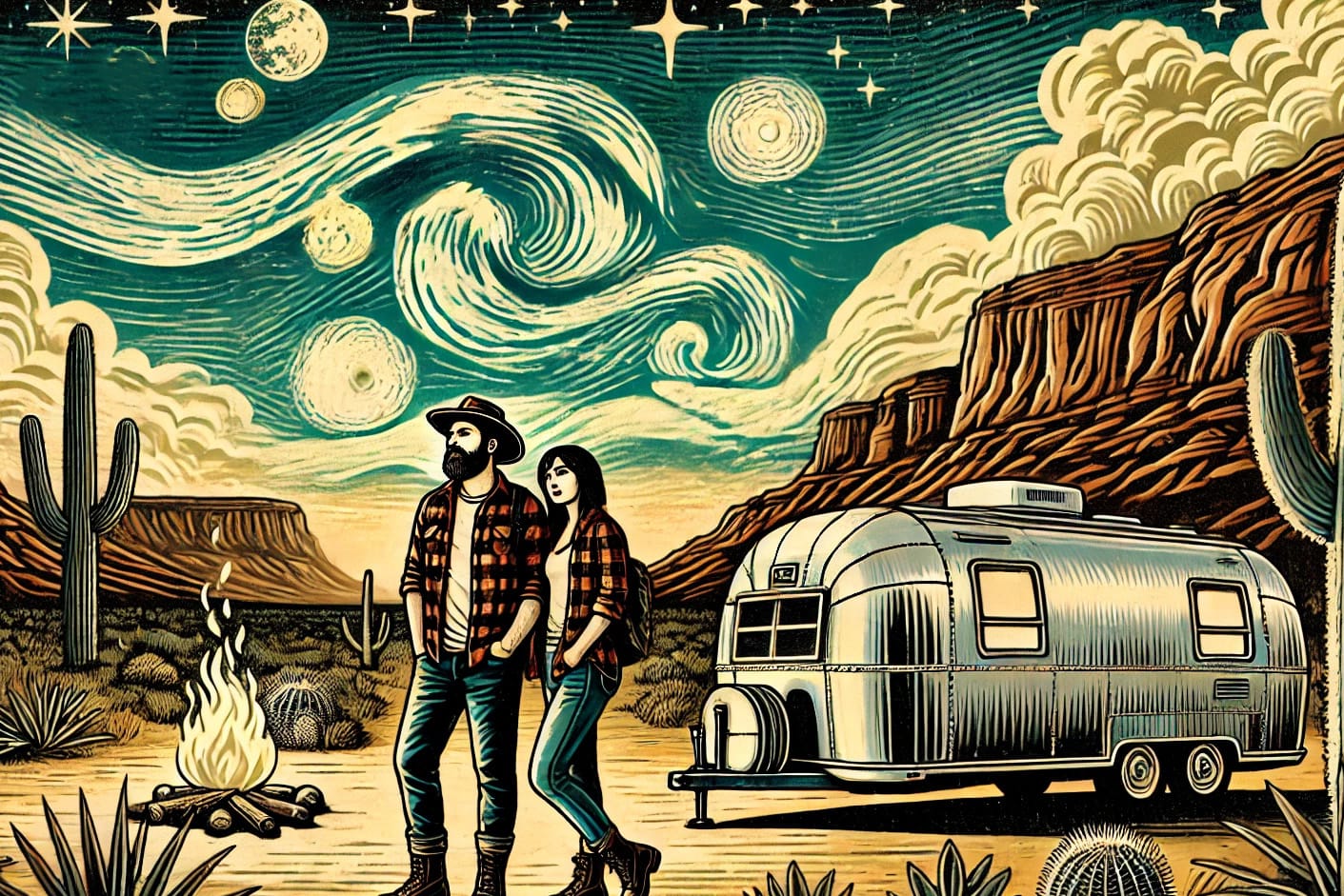
The "Nutmeg the Airstream" section is centrally about Offerman's marriage to Megan Mullally — about what it means to choose a hard thing together, to be uncomfortable together, to argue, reconcile, and keep up the adventure.
I found it enlightening to read Offerman, without irony or defensiveness, write that his wife's presence keeps him sane. In the Covid section, he's direct: without Megan, he says, he would have been "truly in peril." That's not a throwaway line. It's a serious acknowledgment about what actually sustains a man.
His admission that "my general happiness depends upon my ability to accomplish good, productive work that does somebody some good" is one of the most honest things in the book. And the fact that he offers it in the same breath as his gratitude for his marriage suggests he doesn't see those two things as separate.
Questions to Explore:
- What have you done hard things with — not for, not instead of, but alongside — someone you love? What did that experience reveal about the relationship?
- He's clear that his well-being depends on work that matters and a partnership that holds. How does that land for you? What does your own version of that look like?
Passages Worth Discussing
On Attention: "The more I focused my attention on myself, the stupider I behaved; and the more I focused on others, the likelier I was to be of actual service, because I could then apprehend the work that needed doing."
On Saying Yes: "I'll never forget the inherent lesson in George's insistence that we say yes to life as hard as we could."
On Values: "Where I come from, values still exist, and they're based not on skin color, or religion, or sexual orientation, but solely on decency."
On Neighborliness: "In my experience in modern-day America, we have been encouraged more and more to be the opposite of neighborly, because there is arguably no demonstrable financial benefit to acting warmly toward our fellow humans."
Looking Ahead
For June's TWG meeting, we'll be reading Niall Williams's John — all the details will be shared soon. We'll continue exploring these questions of adventure, responsibility, love, and what it means to be a good man.
You can sign up with some of the details TBD here: The Wild Gentleman Book Club RSVP June 2026.
Please share any suggestions: dennis@thewildgentleman.com
Final Thoughts
Offerman isn't writing directly about masculinity, which is part of what makes this book interesting for this group. He's writing about love, adventure, friendship, attention, craft, belonging, and responsibility. Those all turn out to be part of the conversation to be better men.
The journey Offerman takes leads him to be more grateful, more self-aware, more willing to sit still. He walks, watches, listens, and pays close attention to people who have figured out something he hasn't. He remains a student, with the goal of continuing to improve as a man.
Tonight, let's dig into the journeys we've taken and what we've learned about ourselves.
The Wild Gentleman Book Club - Where thoughtful men gather to explore literature, meaning, and authentic masculinity.
Wild at Heart. Refined in Mind