Newsletter #11 - Nice is a Strategy. Good is Character.


Updates
We have our next The Wild Gentleman Book Club meeting this week.
We had a shorter window of time between our last book club and this month's summer-ish schedule — with Memorial Day and Boston Tech Week next week. We were originally going to read John by Niall Williams, which Andy recommended. We will now be reading that book for June. (Also, as you can read below, I've outlined all our summer reading selections for the book club.)
On Wednesday, we'll be discussing Nick Offerman's Where the Deer and the Antelope Play, a funny, honest probe into how we as humans can — and need to — connect with the wildness that surrounds us.
The Wild Gentleman Book Club
Wednesday, May 20th at 6:00 PM
Paddy's Public House in West Newton
RSVP here: https://luma.com/cjous2t2
Questions? Reach me at dennis@thewildgentleman.com.
Read on.
The Wild Gentleman in April
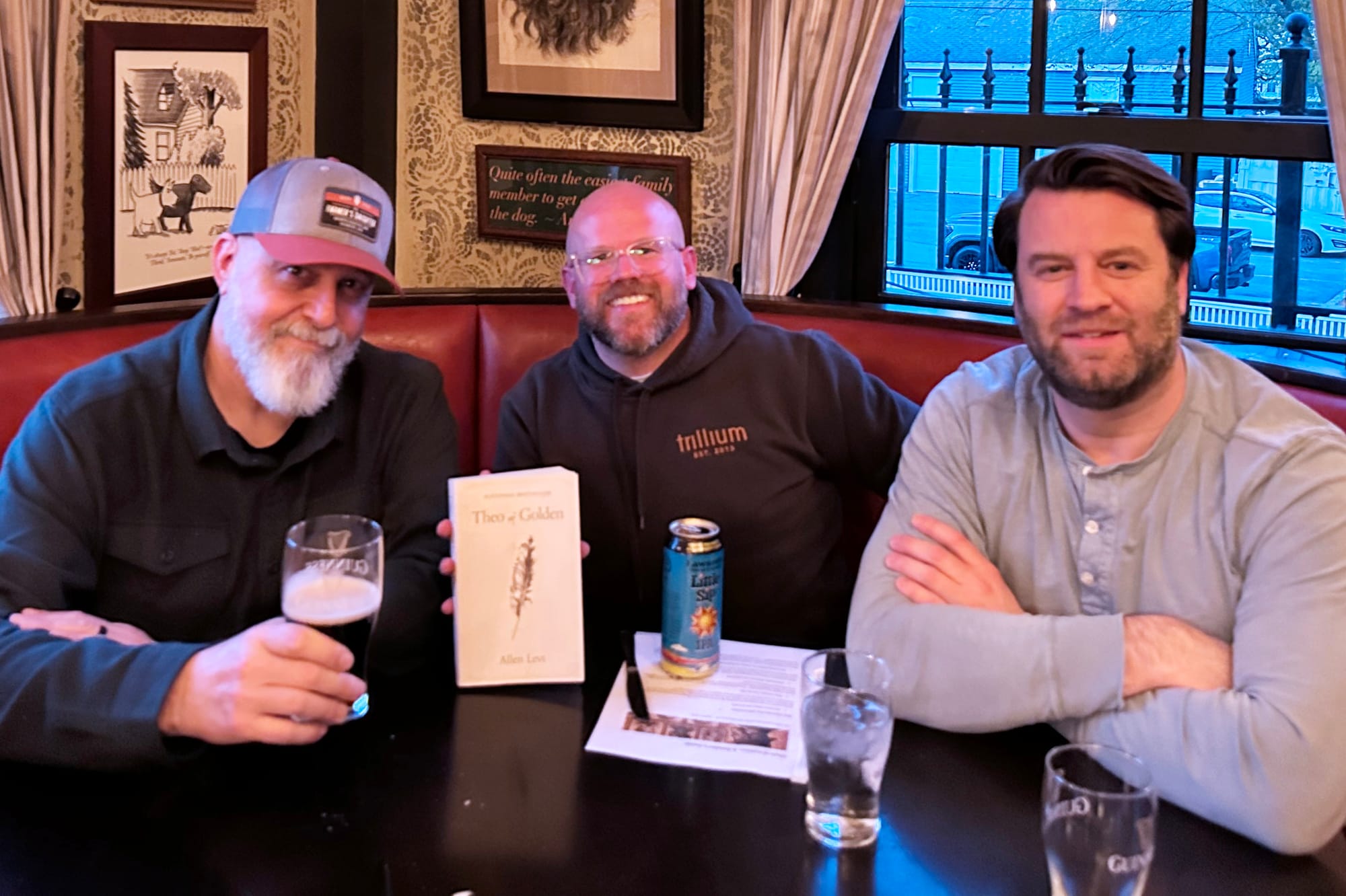
We gathered on a Tuesday evening at Paddy's and talked Allen Levi's Theo of Golden. Much of the conversation was about how we could strive to embody Theo's approach and make meaningful differences in others' lives. We all found it a worthwhile aspiration to make the type of impactful connections Theo makes in our own families, relationships, friendships, workplaces, and communities.
The book was recommended, and many book clubs have been reading it. It is growing in popularity for good reason. Still, some find Theo of Golden a bit flat in terms of plot and character development. We found it to be a rich and rewarding read. The conversation carried a bit more depth than some of our previous gatherings.
The Wild Gentleman Summer
This month, we're reading Where the Deer and the Antelope Play by Nick Offerman.
I read this years ago and just reread it again. I also listened to the outstanding audiobook, read by Offerman in the manner only he can deliver. The Audible version also lets you read along on your phone or with a Kindle. I am also finishing up the Spotify version during afternoon school pickup rides with my son.
Get your copy at The Wild Gentleman section of Bookshop.org: Where the Deer and the Antelope Play
Summer Reading
Three months, three books. Here's what we're reading and why.
June — John by Niall Williams - This one is a bit different than prior reads with a serious religious bent. Williams reimagines the life of John the Apostle in his final years — an old man living out his final days, wrestling with how age changes faith and memory. It's literary, well-written, and quietly devastating. Not a beach read. Worth every page.
July — Cannery Row by John Steinbeck - Our first, much-needed foray into Steinbeck. The perfect length for a mid-summer read, this book features men who have figured out something the rest of us are still chasing. Steinbeck's Monterey is a world where friendship and idleness are treated as virtues. Perfect for summer. Perfect for this group.
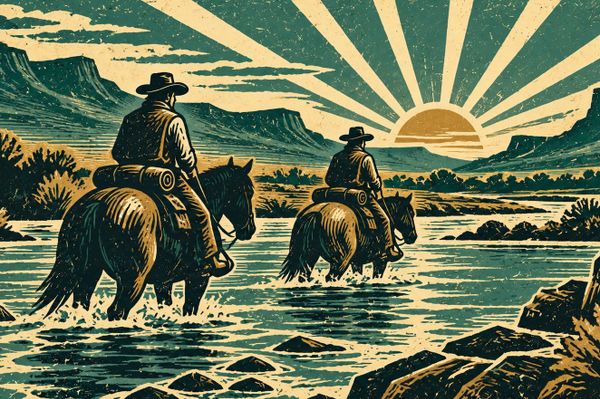
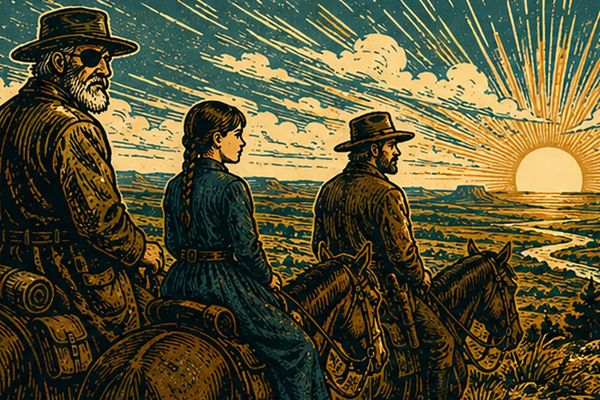
August — True Grit by Charles Portis - We have discussed reading a Western a few times, and this is a good August choice with some of the well-known novels of Cormac McCarthy and Larry McMurtry being a bit too severe or epically long. True Grit features a young girl and a worn-down U.S. Marshal filling its pages with a story of justice, toughness, and moral courage. End the summer strong.
Pick up any of these through The Wild Gentleman's page at Bookshop.org and support independent booksellers while you're at it.
| Month | Book | Author |
|---|---|---|
| May | Where the Deer and the Antelope Play | Nick Offerman |
| June | John | Niall Williams |
| July | Cannery Row | John Steinbeck |
| August | True Grit | Charles Portis |
Being a Good Man is Better Than Being a Nice Guy
A younger member of our family recently found themselves in some hot water. Sarah and I sat the teenager down, talked about the error in judgment, and the value of learning when we fall down. The usual parent move.
The motivation, as told to us: "I was just trying to be a nice guy. A helpful friend."
That's how many of the stories I regret from my younger days also begin.
One came rushing back. College. A crew of football guys, buzzed and goofy, got into it with the RA at a dance. The kind of out-of-nowhere escalation that didn't have to happen.
I stepped in. I'm not entirely sure why. We weren't close — teammates, sure, but teammates is a different category than friends. Something in me wanted to lower the temperature, smooth it over. It didn't work. The RA escalated. The football boys got fired up. Security was called. Somehow, I was part of it.
A hearing followed.
Here's where it gets interesting. I was clearly told that I could have a separate meeting. My role in what happened was genuinely different from the other guys'. The dean's office knew it. I had a reasonable path through this if I just walked in alone and told my story on my own terms.
I didn't.
Out of something I told myself was solidarity, I walked in with the group. They needed the support, I figured. That's what you do as a nice guy.
I was put on probation.
It took years to recognize what had actually happened. Not the hearing — the pattern. I have no idea if those guys ever thought twice about what I did. I don't know if it registered at all. I stood with them when I had an out, took a consequence I didn't need to, and, as far as I can tell, no one noticed.
Obviously, being nice is a commendable quality. However, there's this other thing about wanting to be seen as a nice guy — the point we wanted our teenager to understand. Being a "nice guy" rarely lands where you think it will.
Instead, strive to be a good man.
There's a supposed quote from Morgan Freeman — one that pops up now and again, source unclear — that at some point, he'd stopped being nice. He'd been getting steamrolled. Taken advantage of. Disrespected. And he was done with it. But then came the realization: "I am not nice. I am a good person. There’s a difference." (Upon some research, this quote most likely isn't from Morgan Freeman, but that's who it is most often attributed to for some reason...)
Whoever made the above statement, it carries a great deal of truth, albeit with a bit of nuance.
The author and therapist, Dr. Robert Glover, makes a related argument in his book No More Mr. Nice Guy. Although, having read the book, Glover's points can veer into some headscratching conclusions, his claim is that nice guys aren't actually generous — they're afraid — seems reasonable.
For Glover, "nice guys" do things for people hoping to get something back: approval, gratitude, a chance to feel like the kind of person who helps. When the reciprocity doesn't come, they feel resentful and confused. The niceness, Glover argues, was never really about the other person.
And, this is connective tissue between our teenager's quest to help others and my own collegiate misadventure.
Being good is different from being nice altogether.
Being good means telling the hard truth when the easy silence is right there. (The "hard right versus the easy wrong," attributed to West Point but something imprinted in my soul by the Phinneys during my days teaching at what is now Dexter-Southfield.)
Nice is a social strategy. Good is moral character.
There's a section of this month's The Wild Gentleman Book Club read, Where the Deer and the Antelope Play, in which Nick Offerman veers into an aside about the lack of friendliness between him, a runner, and the drivers on the Los Angeles roads near his home.
As Offerman describes it, "In my experience in modern-day America, we have been encouraged more and more to be the opposite of neighborly, because there is arguably no demonstratable financial benefit to acting warmly toward our fellow humans." He goes on, "We have been taught it's a "dog-eat-dog world," and that "time is money," so who cares about the neighbors, and anybody else."
In Offerman's example, what isn't lacking is niceness. It is goodness. Being good is its own means to an end. As is being neighborly. It's what good men do.
The question worth sitting with: Are you being nice because it's good, or because you're hopeful of some outcome or benefit?
The Gentleman Shares - Recent Thought-Provoking Reading and More
A few things worth your time this week:
The Testosterone Moment Is Here. And Men May Never Look the Same. (or, "Why So Many Guys are Obsessed with Testosterone") -Azeen Ghorayshi, The New York Times
This is a long read from a recent New York Times Magazine. It is wide-ranging, covering the history of testosterone and its uses, and sometimes overuse. The story is very interesting and breaks down the differences of those who should be using testosterone to improve their lives and those who are leveraging it as the key to alpha-malehood.
"The Loneliest Man in the Room" - Mike Troiano, People Stuff
Mike, a TWG book club regular, is a truly wonderful storyteller. Here, he writes about Anthony Bourdain, the sadness of his death, his relationship with fame, and his seemingly unsuccessful quest for the love he yearned for.
Troiano nails it here: "[B]eing loved isn’t something you earn through enough of the right kind of winning. It’s something you allow."
"My Writing Education: A Time Line" - George Saunders, The New Yorker
Since George Saunders makes another appearance in this month's book, as a partner on Nick Offerman's adventures in Glacier National Park, this is an older read, but really interesting.
An Ask to Help The Wild Gentleman
Two ways to help keep this thing going.
If you know someone who'd find this useful, send it to them. Forward the email. Text them the link. That's the whole growth strategy.
If you want to do more, become a paid member. Seven dollars a month — less than a paperback. You get the full archive of printable reader's guides, comments on every post (where the conversation keeps going after you close the email), and I'm in both.
If you're already a paid member: Thank you. It means more than I say.
Wild at Heart. Refined in Mind.
Dennis