John: A Reader's Guide

Meeting #11 - Wednesday, June 24, 2026
The Wild Gentleman Book Club
In May, we discussed Nick Offerman's Where the Deer and the Antelope Play.
This month, we meet once again at Paddy's with a wholly different story. Irish author Niall Williams gives a great explanation on his blog about what led him to write the book, John. He admits that although he didn't attend his nearby church often, seeing it in the distance prompted him to ask, "What was John doing the day before he wrote the gospel?"
John Meeting Details
On Wednesday, June 24th, 2026, we will meet at 6:00 PM at Paddy's Public House in West Newton for an in-person TWG book club get-together.
This month's book, John, can also be listened to on Audible and Spotify.
You can find more information and RSVP here: The Wild Gentleman Book Club - Meeting #11.
You can also get a printable version of this reading guide here: Printable Reading Guide.
Summer Reading for July and August
July — Cannery Row by John Steinbeck
- RSVP here for July 21st: https://luma.com/406eg4kq
August — True Grit by Charles Portis
- RSVP here for August 12th: https://luma.com/tpw9tpxo
Pick up any of these through The Wild Gentleman's page at Bookshop.org
Lessons for Men from John in 2026?
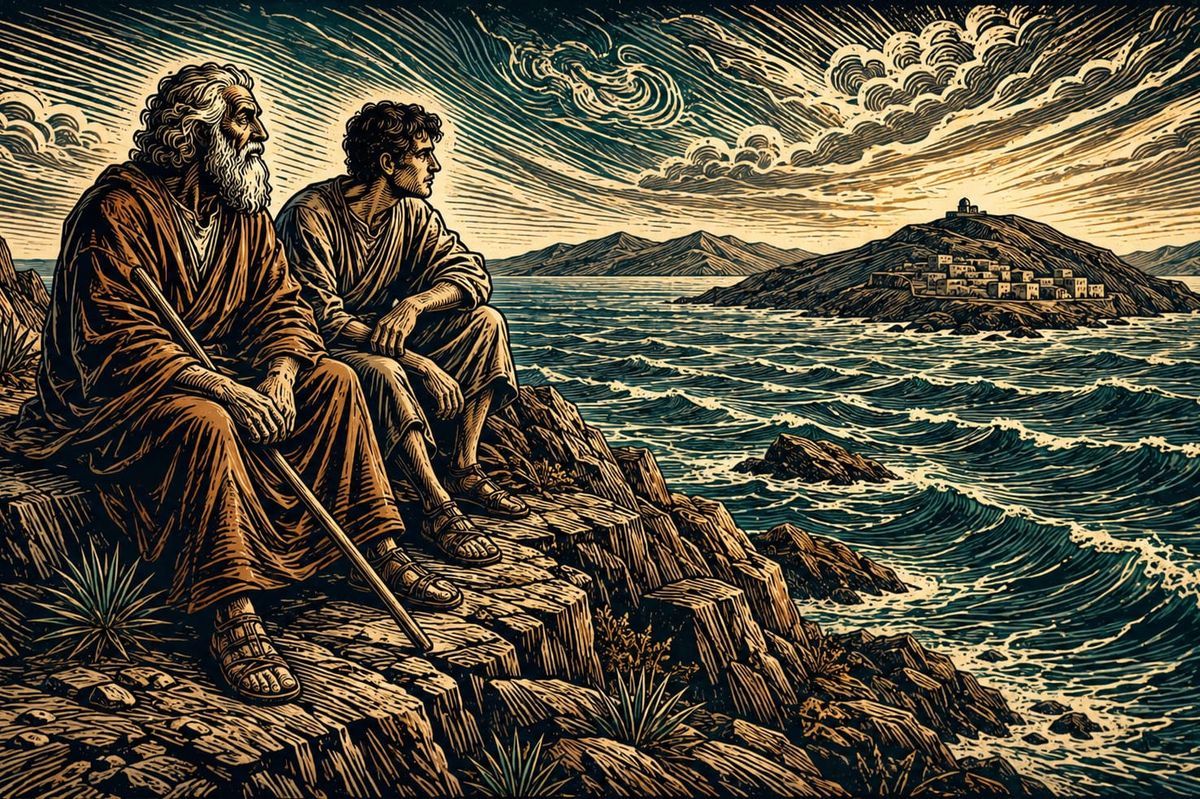
One moment from this novel that really stood out was John, the youngest of Jesus's apostles, frail and blind, being led by the hand across the island of Patmos by one of his disciples.
He was most likely a teenager when the defining event of his life occurred. When we are introduced to him by Niall Williams, he is an old man on a desolate island, surrounded by a small and fracturing community of men. Some have given up everything; many are waiting on a promised Revelation that hasn't come. All are intently believing and meditating on the memory of what John witnessed decades earlier.
Amazingly, this story of men in old age, men searching for meaning, men trusting each other, is a love story.
Not a history. A love story — between a man and the person who changed his life, between a teacher and his disciples, between old men who have chosen, against all reasonable odds, to remain faithful to each other and to something they can no longer prove.
Three things stayed with me after I finished this book.
The first is what age does to a person. Williams's John is diminished in every physical way, his memory scattershot — and yet, he finds the clarity he has longed for most of his life. This is something that challenges the way most of us think about what getting older takes from us versus what it might give us, if we let it.
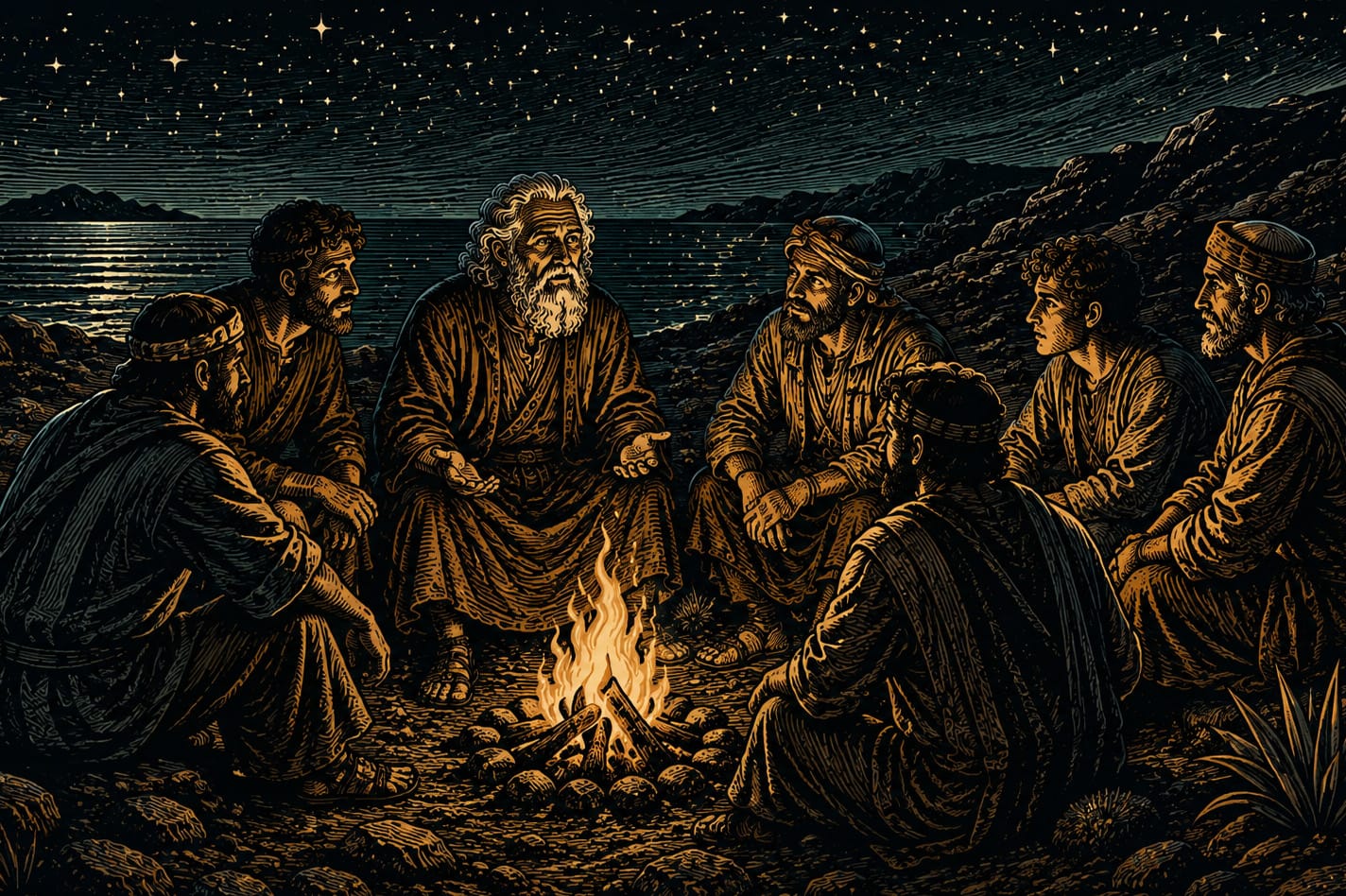
The second is brotherhood. The men around John on Patmos are not symbols or supporting characters. They are fallible men who chose to stand in belief. When a few walk away, others remain. Not only do they stay to learn, but they also tend to John with a kind of quiet care that most men have never offered to another man, and few of us have received.
The third — and most central — is love. Not the word. The thing itself. The biblical gospel of John differs from the others precisely because of where it arrives: God is love. In the book, we bear witness to this realization that took sixty years of exile, grief, and waiting.
That's the book. A very old man, in the company of faithful men, learning — still learning — what it means to love the way he was loved.
Discussion Guide
1. Age and Getting Older
John was the youngest apostle, and in his memories, his youth shines through. The novel, however, depicts a frail, blind man guided by younger men, dependent on others to navigate a world he can no longer see.
I think John's age and physical diminishment are the point. The most visionary account of what he witnessed is dictated by the man who can no longer see. From the end of his life, not the beginning.
We live in a culture that has no framework for aging well. Older means slower, less relevant, less valuable. John offers a different model — freed by the fact that death is near, he finds the truth that his younger self could not.
Questions to Explore:
- John was most likely a teenager when the defining event of his life occurred. Is there any defining event or moments from your own life that still appear or orient your thinking?
- What has age taken from you? Furthermore, what have you gained from age — in clarity, perspective, the freedom from things you used to care about?
- What do you know now about your own life — your friends, your family, your marriage, your work, your relationships, your faith — that you couldn't have known at 25?
2. Brotherhood
One of John's disciples leaves. He disavows Christ's divinity, breaks from the community, and sails from Patmos. John lets him go.
The others stay.
Staying is not glamorous. It doesn't feel, from the inside, like anything heroic. It feels like showing up again. Tending to something even when it's hard, and you're not sure it's going to work.
The disciples in this book are depicted with great humanity. They bicker. They doubt. They make mistakes. They tend to John with a quiet reverence, unlike almost any portrayal of men caring for men I've read. There's no performance in it. Just men doing what the situation requires.
Most of us were never taught this. We were taught to compete, to hide emotions, and to solve problems through actions. The version of male friendship most of us grew up with is side-by-side camaraderie, which is different from what John shows us. Face-to-face. Hands-on. Staying with the person who is diminished. Selfless. Supportive.
Questions to Explore:
- Think about the men in your life who have stayed — who showed up not when things were good but when they weren't. What do you think of how they persisted?
- Have you ever been the person who stayed when it would have been easier to leave? Have you ever been the one who left? What do those two experiences feel like from the inside?
3. Love
John's gospel is different from Matthew, Mark, and Luke. It's not just the story of Jesus. After sixty-plus years of exile and grief and doubt and waiting, John translates the true message — it is not justice, not doctrine, not ceremony, not the triumph of the righteous.
It's love.
John's true revelation is that love is the thing that cannot be exiled, argued away, or killed. It outlasts everything.
But this is not sentimental love. Not the love of greeting cards or easy warmth. The love John describes is demanding, specific, and requires sacrifice.
Most of us men provide for the people we love, protect them, and show up for the big moments. But the close, specific, costly love — the love that requires you to be undone by another person's suffering, to be present in their diminishment, to offer something without knowing if it will be received — that we are less practiced at.
John spent sixty years learning to love the way he had been loved. That's the whole book.
Questions to Explore:
- John's gospel leads with love as the defining characteristic of God and Jesus's key message. After everything he witnessed and endured, that's what he concludes. Does that surprise you?
- Think about the people in your life — a partner, a child, a parent, a friend — who you love but love at a distance. What would it mean to move closer?
- The love Williams depicts in this novel is not comfortable. It's the love that stays when staying is hard and that remains faithful without guarantee of return. Where in your own life is that kind of love being asked of you right now?
Looking Ahead
For July's TWG meeting, we'll be reading Cannery Row by John Steinbeck.
You can RSVP for our July 21st in-person meeting here: https://luma.com/406eg4kq
Please email with any suggestions: dennis@thewildgentleman.com
Final Thoughts
When Niall Williams wrote John, he was struggling with balancing the art of writing with his familial and financial duties. He found balance by researching, becoming aware, and then creating a work of historical fiction about how John came to envelop his story of Jesus with the concept of love. Not sentiment. Not optimism. Love as the hardest, most demanding, most enduring thing there is. Love as the only thing that survived the exile, the doubt, the defection, the long years of waiting.
Surrounded by men who chose to stay, John spends sixty years waiting, searching, trying to remember. And, in the end, he can finally put into words what that life was truly all about.
John spent sixty years carrying what he witnessed toward the moment he could finally say it. Most of us are doing something like that — carrying something we haven't fully named yet, looking for the right company to help us find the words. That's what we're here for. We hope you'll join us.
The Wild Gentleman Book Club - Where thoughtful men gather to explore literature, meaning, and authentic masculinity.
Wild at Heart. Refined in Mind