Newsletter #12 - Brotherly Love

Updates
June's The Wild Gentleman Book Club meeting is TONIGHT.
This month's book is a departure from last month's, as we will be discussing John by Niall Williams.
The book is written from an insight Williams had — and explains here — wondering what John was doing the day before the gospel attributed to him was written. It is one of the more literary books we have read and centers on themes we tend to discuss at our monthly book club get-togethers, especially legacy, brotherhood, aging, and, most importantly, love.
The Wild Gentleman Book Club
Wednesday, June 24th at 6:00 PM
Paddy's Public House in West Newton
RSVP here: https://luma.com/mz3conez
Questions? Reach me at dennis@thewildgentleman.com.
Read on.
The Wild Gentleman in May
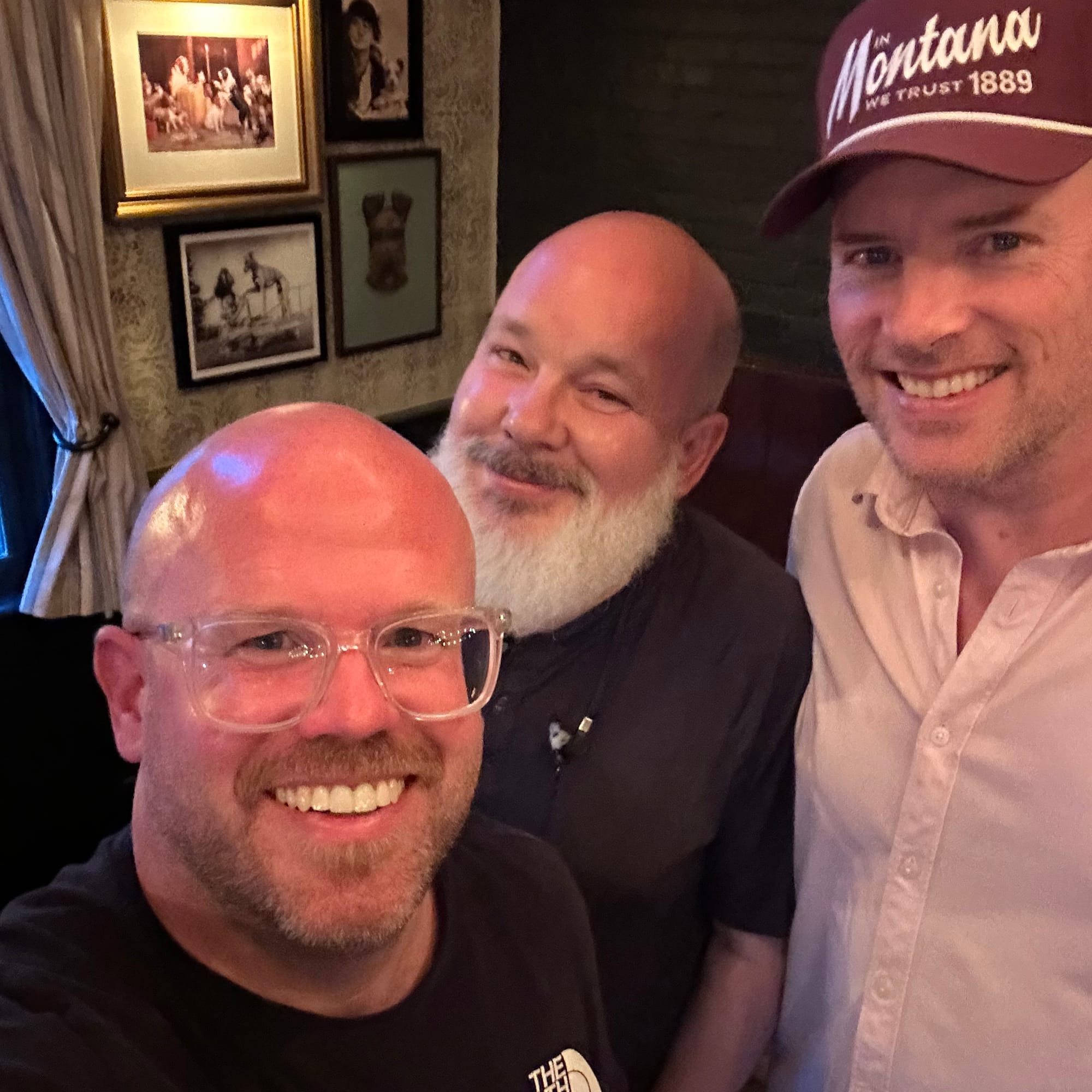
Meeting once again at Paddy's in Newton, we had a great conversation and a bunch of laughs centered around Nick Offerman's Where the Deer and the Antelope Play. While much of the focus was on the book's humor, we had a lively discussion about how it treats ideas of friendship, adventure, relationships, and our connections with nature.
The book does get political in sections, as Offerman wrote it, and many of its moments occur in the midst of and following the COVID-19 outbreak. It is actually quite an interesting window into a specific moment in our lives and into some of the ways to respond to the lack of human connection many of us felt, and continue to feel, a few years later.
The Wild Gentleman Summer
Having the full summer schedule in place should make it easier to plan ahead
Niall Williams's John for June
The book delves into a story centered on religion, but never really feels like a book about Christianity. Instead, it shines a light on a few human endeavors and the challenges faced by those who understood the importance of founding a different type of church in the first century of the modern era.
Also, it is just an incredibly beautiful and well-written book.
If you have limited time, check out the Audible and Spotify versions to get a sense of the story.
Get your copy at The Wild Gentleman section of Bookshop.org: John.
Summer Reading for July and August
The rest of the summer is planned, with books for each month outlined below and RSVPs for our monthly in-person book club.
July — Cannery Row by John Steinbeck - Steinbeck is always a good summer read. Cannery Row is a novel about people who have decided — by choice or by circumstance — not to chase the thing everyone else is chasing.
This is a book about what makes a life good as opposed to what makes a life successful. Short enough to read in a weekend. Rich enough to discuss for an hour.
RSVP here for July 21st: https://luma.com/406eg4kq
August — True Grit by Charles Portis - We've talked about reading a Western more than once. This is the right one to start with. Justice, toughness, and moral courage are the key themes of this tale about the bond between a teenage girl, Mattie Ross, and the one-eyed, hard-drinking man, Rooster Cogburn, whom she hires to avenge a murder.
RSVP here for August 12th: https://luma.com/tpw9tpxo
Pick up any of these through The Wild Gentleman's page at Bookshop.org and support independent booksellers while you're at it.
Hey Brother.
My mother has a large family tree. This past weekend, we had a reunion of sorts that was attended by about 40 or so of the clan, aunts, cousins, and their progeny. The collective of characters I have known over the years — which includes grandparents, aunts, uncles, and cousins — was an exemplar of what we think of as a large Irish-Catholic Boston family.
Her grandparents on both sides came directly from Ireland. My grandfather — Mom's dad — grew up in Jamaica Plain, a stone's throw from Franklin Park and the legendary Doyle's Cafe. He was the oldest of a crew of nine. He and his brothers and sisters would often break out into sessions of singing old Irish folksongs at family outings.
Among his siblings, one brother, Paul, followed the classic path to becoming an eminent police officer in the Boston suburbs. I bring up Paul because he was a quintessential policeman. At his funeral, his children referenced his oft-used greeting when meeting other officers: "Hey brother."
"Hey brother," if you aren't familiar, is the oft-used greeting of solidarity and respect used among the brotherhood of police officers. ("Hey sister," is also used to denote the fellowship amongst officers.)
I mention this because I have been thinking a great deal recently about brotherhood (as well as parenthood, sisterhood, and the like). When thinking about modern brotherhood, a deep connection between men and a fellowship among the like-minded, the fraternity of police officers is a stellar example of how mutual admiration among colleagues and the acknowledgment of shared experience (in this case, risk) builds deep connection.
The book we read this month, John, also features a band of brothers who are related in belief, hope, duty, and, most importantly, love. We meet the men — a wide range of ages and skill sets — exiled on an island in the Mediterranean. They got through an array of group and individual trials — isolation, violence, physical pain, and life-threatening illness, the destructiveness of nature, conspiratorial and absurdist challenges to their deep-held beliefs and faith — and seem to grow into better versions of themselves for it. The group supports. The man evolves.
And to me, this is the essence of having a group or partner that is there by your side. You gain the belief in yourself and trust in the almost unyielding support of others that allows you to take leaps of faith and undertake outcome-uncertain endeavors. And, most of the time, you are better for it.
When a quest doesn't work, your brother (metaphorically) is there to pick you up, dust you off, and set out and try again.
There are many other similar stories centered on brotherhood in literature. One of the most famous is The Three Musketeers. Without even reading Alexandre Dumas's classic story of Athos, Porthos, Aramis, and d'Artagnan, the trio (quartet!) is one of the most prominent examples of brotherhood. Their cry, "Un pour tous, tous pour un!" — All for one, one for all — is a perfect encapsulation of the idea of brotherhood described above: Be selfless for the group and the group will take care of you.
However, The Three Musketeers is also a tale filled with lust, drunkenness, reserved emotions, and mistrust. So, when it comes down to it, it isn't an ideal version of brotherhood. You could also look at the relationships between Tom Sawyer and Huck Finn, and Gatsby and Nick in a similar vein.
In John, Papias is a much better representation of the idea of brotherhood, which is central to the story. Papias cares for John, who is nearing 100 years old, blind, and physically feeble. He is also the primary character whose actions best symbolize John's realization of acting through love as the utmost revelatory lesson from the teachings and life of Jesus. More than anything, Papias's devotion to John, even through doubts planted by competing cult leaders and the cunningly ambitious Matthias, is the central triumph of the novel.
In the end, Papias is cared for through his ailments by the newest, youngest member of this brotherhood — much as he had looked after John. It is also revealed that Papias eventually plays a vital role in the continuation and spread of John's story.
Similarly, relationships among prominent male characters in a host of other stories do better than those in The Three Musketeers at optimizing the selflessness and corresponding support inherent in the idea of brotherhood.
Next month, we will read John Steinbeck's Cannery Row; however, most everyone who has read Of Mice and Men will recognize in the characters George and Lennie the depth of connection that encompasses love, support, and, in the end, an excruciating act of compassion between the two migrant workers.
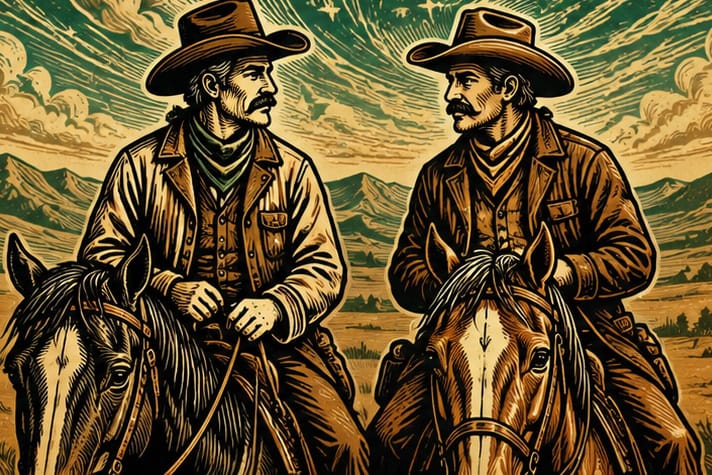
Another resonant example of true brotherhood is the bond forged through shared experience between Gus and Call in the quintessential American Western, Lonesome Dove. The two old Rangers have been there for each other for decades, yet can barely acknowledge the love and devotion that exists between them. They express their love entirely through presence and action.
Call bringing the deceased Gus home across the entire West is one of the great acts of devotion in American fiction.
In all of these examples, there are portrayals that reflect the ideals we regularly discuss at The Wild Gentleman Book Club. Some of these characters act in ways that typify what it means to be a good man, but there are also behaviors that we recognize in both fiction and ourselves that, while often held up as masculine behavior in its highest form, are actually quite the opposite.
In The Three Musketeers, we witness side-by-side camaraderie contingent on real or perceived strength. The George/Lennie and Call/Gus relationships, while modeling support between men, also serve as cautionary tales of where men fall down in communicating and sharing love.
In John, we get to a third model. The disciples stay with the diminished, not out of a sense of duty, but a love that it takes the story for them to realize and acknowledge.
The disciples in John don't say much about how they feel about each other. Neither did Gus and Call. But they stayed. They showed up. They led the blind man across the island by the hand. That's the model. We can do that too. Maybe even better.
The Gentleman Shares - Recent Thought-Provoking Reading and More
A few things worth your time this week:
"Behind Every Dad Bod Is a Healthy Dad Brain" - Darby Saxbe, New York Times
Saxbe, the author of the recent book “Dad Brain: The New Science of Fatherhood and How It Shapes Men’s Lives,” digs into recent data on the impact being a dad has on men's brains. As Saxbe notes, "If you look at the data, men are not uniformly heeding the call of the manosphere to embrace hustle culture and eschew family life." The results show benefits both mentally and socially. This is a very positive development for masculinity in general.
"The Kids Are Not Rejecting AI. They're Rejecting the Pitch." - Richard Banfield, Substack
Richard Banfield runs a great program, Second Harvest, with Devon McDonald. In this post, he argues that AI is not just another tech fad; as a tool, it is incredibly helpful. However, the hype seems to be trickling down from executives who seem most poised to benefit personally from AI products, whatever the consequences for others may be.
"St. Paul Remade History. How Did He Do It? - Adam Gopnik, The New Yorker
This article, published in April, is a great complement to the story of the apostle John in Niall Williams's book. My key takeaway was that the history of religion is often not as linear as we may think.
An Ask to Help The Wild Gentleman
I really appreciate all the support to keep this project going.
If you know someone who'd enjoy what we are doing with The Wild Gentleman, please forward the email. Text them the link.
If you want to do more, become a paid member. You get the full archive of printable reader's guides, the ability to comment on posts, and potentially more.
If you're already a paid member: Thank you again.
Wild at Heart. Refined in Mind.
Dennis